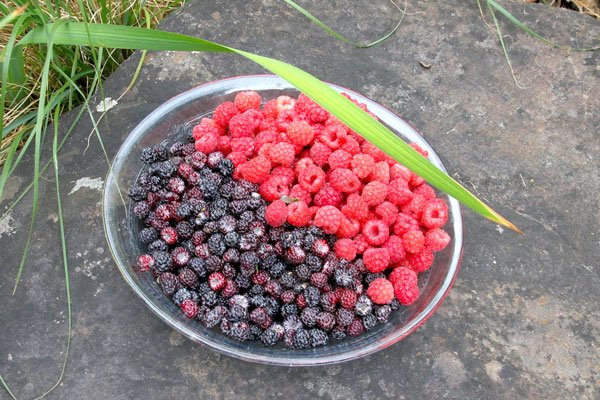

Berry picking, freezing fillets, assessing future hard mast crops, and consuming greens and fresh fruits begin the first of many wild gathering expeditions during July.
Wild fruits, albeit overlooked by many, could be ancillary to meatier trips, later in summer for venison, squirrels, wild turkeys, ruffed grouse, pheasants and rabbits.
Berry picking will allow pointing out a dying elm, a likely sulphur fungus black cherry log, and bountiful nuts on shagbark hickory and black walnut trees. Feel it’s too tedious to crack nuts? Fill a bag to use as squirrel food when the snow piles high, or do a messy-crack and put them out for bird food.
“Rabbit hunting is going to be great in many parts, based on what I’ve seen,” suggests Doug Williams, D W Sports Center, in Portage. “Now would be a great time to think about a beagle pup.”
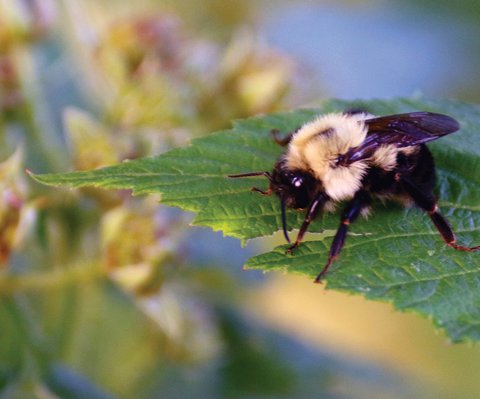
“It can be an interesting excursion to northern Wisconsin checking bears and berries and maybe we’ll see a hen grouse on a forest road. It’s pretty easy to tell if she has a brood of chicks based on her mannerisms. Wait and it won’t be long before 6-8 large bumblebee-like yellow puffs follow her to the other side,” said Stan Ferrell, a lover of northern Wisconsin, but farming in Lafayette County.
The Department of Natural Resources has not yet written and released their annual ruffed grouse drumming count telling what the gamebird figures suggest hunters and leaf peekers are likely to incur after the Sept. 17 bird opener.
Deb Farrell, Stan’s berry-picking and jam-making wife, doesn’t give the blackcap (black raspberry) ongoing season the best score. “The berries continue to ripen, and the size will depend a lot on rainfall during the next week or two,” Deb said.
That goes double for blackberries, which follow the raspberries as one of Wisconsin’s premier jam, jelly and pie wild fruits. Mulberries, now being picked, are distant third.
See a dying American elm or an older stump or log that might be noted for next spring’s morel searches or this fall’s sulphur fungus or hen-of-the-woods foreys. Ginseng flowers, albeit tiny, can be a real eye opener, only topped by the crimson berries in August.
Blue jays and red-headed woodpeckers are congregating in pin oak trees. This means Japanese beetles are showing up and time needs to be allocated for picking Japanese beetles from pole beans, a twice-daily task. Colorado potato bugs and tobacco hornworms on tomatoes might not take well to being dropped in a water, soap, and bleach mixture, but it beats eating these plants’ fruits covered with insecticide dust.
In many cases hand picking these insects from a small garden, particularly before they multiply works as well as spraying or dusting.
For those fish fillets, Don Martin, at Martin’s in Monroe recommend red worms, leaf worms and waxworms for bluegills on one of the Madison lakes. “A customer brought me a platter of ground fish patties, seasoned, and they fit nicely on a bun,” he said.
Martin is reminding folks of last autumn’s shell shortage, and it hasn’t gotten any better, he says. “But be careful; I sold a box to a man for $37.95, who wanted a second box. He just spent $60 for the same thing earlier in the day.”
Those who purchase and re-sell are trying to make money. Don’t help them at your expense.
For those berry ambles, Doug Williams recommends long pants and some insect repellent, but don’t apply it unless necessary.
Wayne Smith carries his insect repellent with because,” It’s often necessary to freshen the spray while in the field.”
The fruits Smith has seen have not always been of impressive size, either.
Fishing is good, according to Wally Banfi, at Wilderness Fish and Game in Sauk City, and he suggests the Madison Chain of Lakes where muskies, walleyes some bluegills are being caught. Trout have come from some state park lakes, too.
“The rivers are low and we could use some serious rains for fishing, particularly trout fishing.”
Fishing supplies, all the way to the tip of the line, have taken a bit of a price hike, about 20 percent.
Timber rattlesnakes, in their habitat along the Mississippi and Wisconsin rivers and surrounding farmland will be mating next month and that’s when the males begin moving around. Right now, they’re within a mile of their dens, generally in timber and rocky areas, so keep an eye out for snakes in these places, Armund Bartz, with the WDNR, says. If you have a problem rattler, call the DNR for some advice rather than destroying this protected wild animal.
One of timber’s favorite foods is small rodents, often found near brush and rock piles.
Wisconsin’s deciduous forests and a light breeze provide near-perfect relief from hot July days before returning with the abundance.
— Jerry Davis is a freelance writer who lives in Barneveld. He can be reached at sivadjam@mhtc.net or at 608-924-1112.