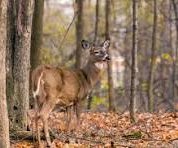
Fawn fascination is ongoing but is most passionate in springtime when we can easily see a newborn white-tailed deer fawn in Wisconsin.
Dan Storm, Wisconsin Department of Natural Resources wildlife researcher recently received a call from a central Wisconsin biologist informing him of triplet fawns, an event that occurs in less than 10 percent of white-tailed deer pregnancies.
Where might one encounter even one newborn fawn? Just about anywhere. On a walking trail in a park or woods. In a lawn on the margin between mowed grass and longer grass. Stuck between a propane tank and concrete wall. Under a Hosta plant leaf. Beside a tree stump or fallen log.
This peak period is usually late May. For few weeks after birth most fawns are not strong enough to get away from predators or to keep up with does, their mothers.
During first several weeks fawns are left alone after nursing, often in tall grass or understory vegetation. This is when their spotted coats and lack of scent help them blend into the surrounding vegetation; their natural instinct is to freeze not run.
While most fawn sightings by humans, and probably predators, are accidental a few anxious fawn seekers make unorganized searches.
These early fawns position themselves in a “camouflage curl” position that further camouflages them from predators and onlookers.
When scientific studies are being conducted, researchers and volunteers simply comb an area where lone does have been seen. Once located, a biologist can reach down and grab the animal that weighs four to eight pounds.
Fawns grow rapidly and may weigh 60-85 pounds by their first winter.
For many hunters, nature lovers, and deer enthusiasts, seeing a fawn as early as possible is important to them and these folks go about searching or at least take hikes giving the greatest chance for coming across a fawn.
In a curled position a fawn has its legs tucked underneath its body, ears flat and head dropped.
If the fawn bolts it is unlikely a human can catch the little critter, researchers have discovered.
Bobcats, black bears, coyotes and dogs are some of the most influential predators of new fawns. Sometimes it is possible to determine the killers by signs left.
June is the month when deer coats go from winter drab to a beautiful reddish-tan. Bucks have noticeable antlers developing on their foreheads; some antlers are already branched.
Deer food changes with vegetation development. Prairie compass plants, even prickly berry bushes are clipped off so long as the stems are not firm and woody. Crops, particularly young alfalfa and soybeans, are favorites. Corn can wait. Almost any woodland vegetation including new tree leaves and understory ferns gets eaten.
Oaks, walnuts, and a few other trees are dropping pollen catkins after pollen has been shed. When meteorologists talk of tree pollen, these are the culprits.
Blackberries and black raspberries are white with flower petals suggesting a bumper crop of first blackcaps about July 4, followed several weeks later with the other aggregate fruit, the blackberry.
Tree mulberries are earlier than blackcaps.
Some wild and fruit-farm strawberries were hit with late frost, which usually means a loss of about 10 percent of production and setting the entire process behind by a week.
Prairies are beginning to show early blossoms, even in those grasslands that were not fired this April. Shooting star and cream wild indigo are showing. Many of these early bloomers are bumblebee-pollinated, with shooting stars having a particular relationship with bees.
Buzz pollination is just that, the bee landing on the downward pointing flower but the bee’s wing muscles do not move the wings, which are involved in creating a flying buzz. These muscles are uncoupled from wings and are used to create vibrations that shake the pollen lose from a flower’s anthers.
When female bees are visiting buzz-pollinated flowers, the bee buzzes while on the flower. While pollinating other flowers including indigo the buzzing stops when the bee lands and then begins when the bee flies to another flower.
Tomatoes, potatoes, yes, they have flowers, peppers, and cranberries are also buzz pollinated by bumblebees.
Wisconsin’s spring turkey season closed May 26 with birds reported.
— Jerry Davis is a freelance writer who lives in Barneveld. He can be reached at sivadjam@mhtc.net or at 608-924-1112.