
L. S. Wagner and E. F. Bauman, Monroe contractors, made a business trip via automobile in early May 1917 to Pewaukee, Waukesha, and Milwaukee. They left about 5:00 a.m. and reached home about midnight, “making the trip of 250 miles in one day.” That had to be quite a fete in the automobiles of the day. That had to be quite the news of the day to be written up in the newspaper.
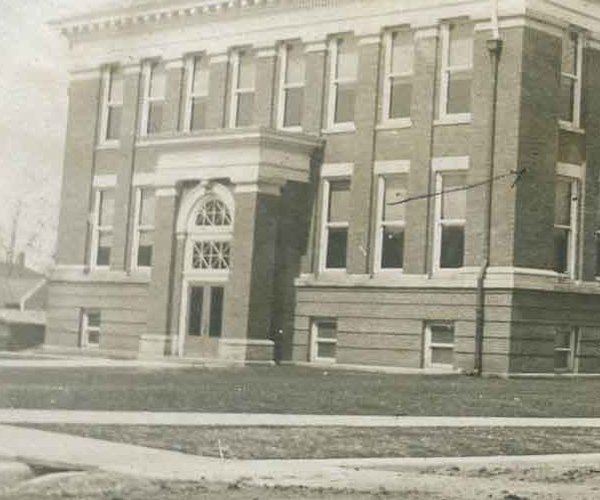
Wagner & Bauman was awarded the contract in June to build a new school in Mt. Horeb, which was to be a duplicate of the Lincoln School in Monroe that they had recently completed. Mt. Horeb eliminated many of the extra features in their building to keep the costs down after “building materials advanced materially in price.” They still planned to pay about $90,000.
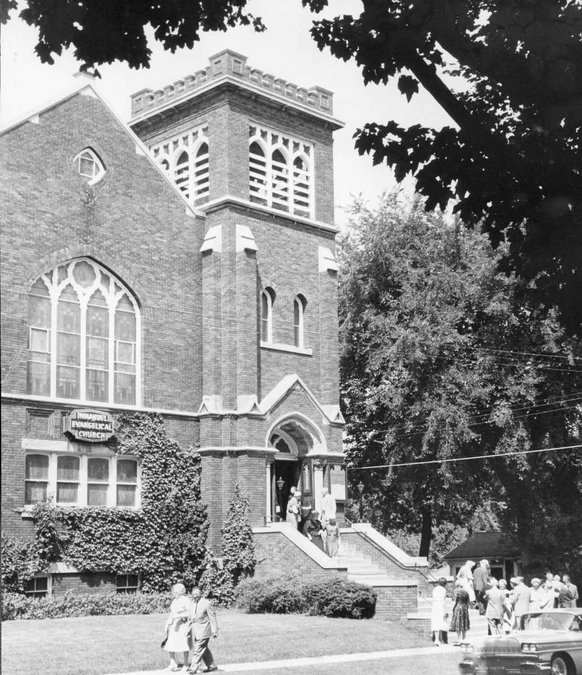
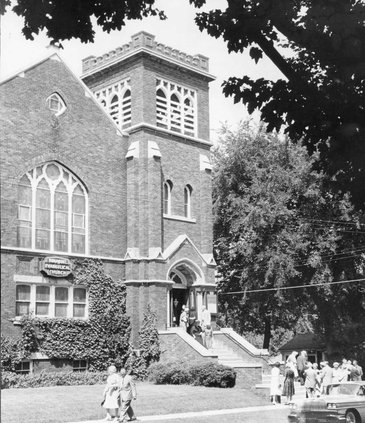
Wagner and Bauman must have parted ways about this time even though no dissolution notice was seen in the paper. The Times shared on July 9, 1919 that Wagner & Howe [possibly Jay Howe, who was listed as a carpenter in the 1917 city directory] had the contract to build the new Grace Lutheran Church for $21,045. “The work of tearing down the present church building in preparation for the erection of a new one” began two days later.
Wagner may have been slowing down a bit with his local projects. He went to Monroe Center, Illinois on September 23, 1919 where he had a contract for a $40,000 school building.
Wagner purchased the large lot on the southeast corner of 19th Avenue and 10th Street, which was 70 feet across and 100 feet deep, from Roy and Hulda Jaberg on November 18, 1919 “for $1.00 and other valuable consideration.” He was to take possession of the home on that lot after the H. W. Chadwick family vacated it the following fall to erect a new home there.
On the following day, Wagner and F. E. Corson also purchased more than 70 acres in Jefferson township as well as the lot at 2269 16th Street in Monroe from William and Kate Ellis for $1.00 and an exchange of real estate. Wagner would own three fourths undivided property and Corson one fourth.
The Monroe Evening Times also shared on February 25, 1920 that “a core of carpenters under the direction of contractor L. S. Wagner started this morning to make extensive improvements at the armory. Everything will be done for the comfort of the men. A man will be on duty at the armory all the time for the convenience of the company members.” More had been printed about those changes. It was appropriate that he made those changes since he was a charter member of Co. H, which was formed in 1882. The armory was razed in 1974 for to make room for the parking lot of the new Commercial & Savings Bank.
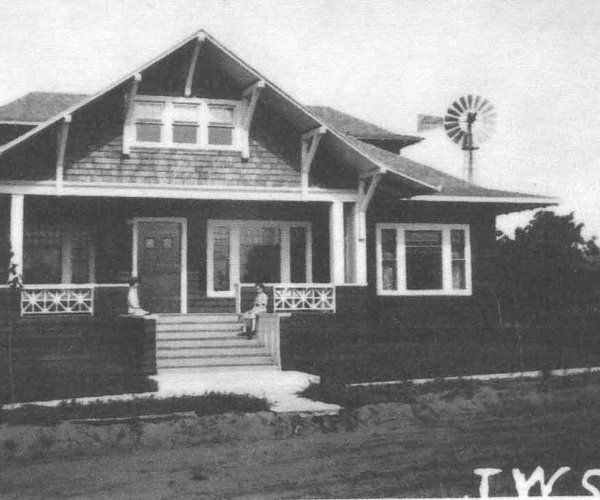
Wagner sold his apartment and much of the property that he had purchased from Schuetzes to Leon and Chester Goetz on March 31, 1920 for $13,500. They planned to use the 98- by 148-foot property for the Co-operative Amusement company. Plans involved “an outdoor theater and dancing pavilion on the order of a summer park or garden.” The apartment building “was not to be disturbed as Wagner planned to build a modern bungalow north of the apartments on a lot which he reserved for that purpose.” It must have been at this time that he moved to the second house west of 17th Avenue on 8th Street.
Dr. Glen Soseman purchased the “residence property” of Mrs. LeRoy Woodle on the northwest corner of 17th Avenue and 8th Street on April 29, 1920 for $4,000. The property was 122.5 feet on the south and 60 feet on the east. The Times stated that Wagner got the contract to make two houses on that property with the eastern house facing east; the western one would be facing south. The deed said that Mary Woodle reserved use of the west 60 feet for erecting a dwelling for which she would have life use.
On the same day Wagner purchased Dr. Soseman’s lot that was located on the corner across the street to the south. As you will learn, Wagner will wait six years to build a new home on this lot.
Five bids to build the Green County Training School were opened on Saturday afternoon, April 16, 1921. Both E. F. Bauman and L. S. Wagner had submitted bids. All bids were too high, so the plans were revised and new bids were received. Only three bids were submitted with Wagner’s bid for the general structure of $30,670 being the lowest. This building also became known as the Green County Teacher’s College and the Green County Normal School, but now serves as the Behring Senior Center.
The final column will share who L. S. Wagner’s final business partner was and record which buildings he built more than 100 years ago.
— Matt Figi is a Monroe resident and a local historian. His column will appear periodically on Saturdays in the Times. He can be reached at mfigi48@tds.net or at 608-325-6503.