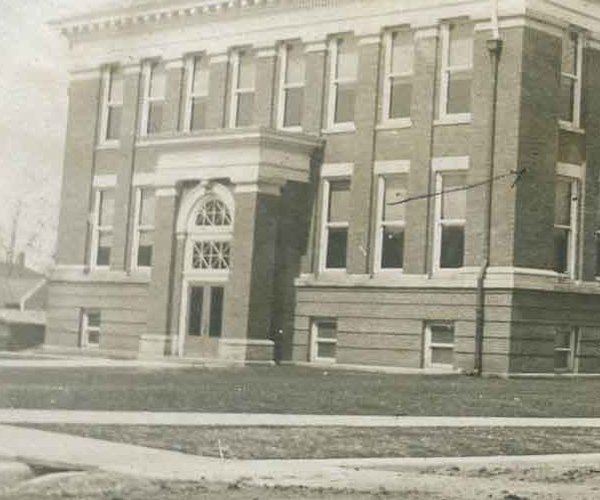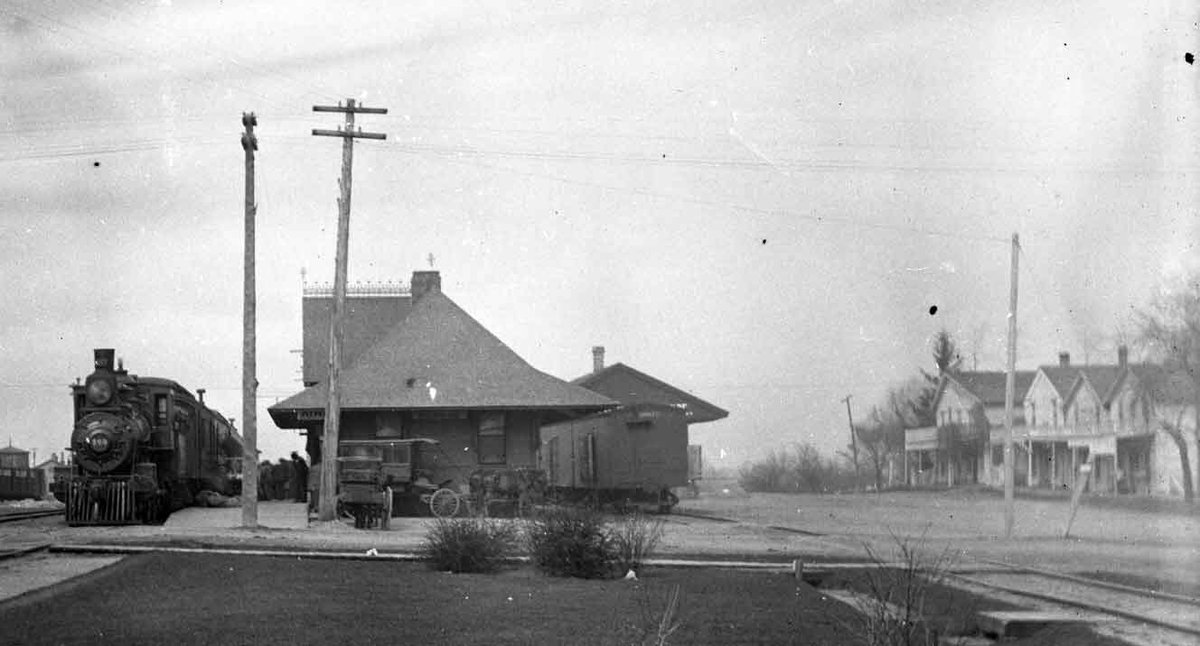
Back in 1880, before it became a city, Monroe had been operating as a village for more than two decades and had a population of about 3,300 people. Monroe had been settled by New Englanders more than 40 years earlier. As you may recall from previous columns, there were several hotels in the village at that time. The American House was built on the southwest corner of the Square in 1841 by Demis Beach. The United States House was built by Charles Hart about six years later on the northeast corner of the Square; it contained 16 rooms with another 17 rooms in two other buildings. The Tremont House [Green County House] was built on the southwest corner of 13th Street and 15th Avenue, just a few blocks up the street from the Milwaukee depot, in 1865 by Rudolf Greenwald and contained 29 rooms in 1884. Anton Miller had converted his furniture manufacturing building on the southeast corner of 12th Street and 16th Avenue, into the City Hotel in 1879 which later had 30 rooms. These businesses were all still operating in 1880.
In addition, the Monroe Hotel (Monroe House), built in 1865 by Casper Oswald just northwest of the Square, contained 21 rooms. [This could be the topic of another column in the future.] At that time the Copeland House, a boarding house, was located just north of the Monroe Hotel. The Commercial House was located on Smokey Row (17th Street) on the corner of 13th Avenue. The Gleissner House was sold in 1880 and became known as the Warfield House in what is now the 1100-block of 15th Avenue. Edward Ruegger had remodeled his 9-bed Spring Square Hotel into a grocery store in June 1879, a month after Miller opened the City Hotel.
There was talk at this time of building a large, new hotel. On April 4, 1880 it was reported that Louis Schuetze, owner of the United States House was “talking of building a new brick hotel” in the spring on that site. The editor added, “Louis is abundantly able to build.”
The editor printed in the same issue, “In saying what we do for the proposed new hotel, we are only giving expression of public feeling, and the necessities of the town. No doubt the similar hotels will do a good business.
“A three or four story hotel built so that a part of the ground floor would be used for stores, and one or two rooms on the second floor for offices, would make the property a paying one for the builder and the hotel proprietor.”
Another article in that issue stated, “The hotel men in Monroe complain of the scarcity of hired help. Good wages are offered for competent and neat girls.”
A final article in that issue said, “When such men as A. Ludlow offer to subscribe five thousand dollars for a new hotel building, it means something.”
Nothing was seen in the Sentinel again for a year when it was shared on May 11, 1881, “The talk about the new brick hotel should not be allowed to die out without something being done. There is going to be built, within the next year or so, a fine hotel in Monroe, and the only point is to settle who is to take the matter in hand. Surely, a thousand dollars difference ought not to blockade the thing when all else is ready.”
The new hotel project “was taking root” two weeks later, according to the editor, who shared that there were two excellent corners for sale, “either of which possesses the requisites for a fine hotel, location, and are good property withall. Don’t let both slip through.”
While discussing the need for a hotel on July 20, the editor said, “There is not another town of its size we know of which has more wealth and enterprise in other directions, which has so long overlooked this necessary thing to complete the public wants. There is not a city in this state of 4,000 inhabitants that entertain so many traveling men, and which might double the number, had we an attractive, commodious, and completely appointed hotel.” He felt that such a hotel would “be constructed here and put in running order before another year has expired.” He also mentioned that there were now three sites being considered. He added, “Whenever it is known that a certain public project is on foot, owners of lots immediately slap a thousand or two on the price. This is wrong.”
In the same article, he mentioned that Arabut Ludlow would be able to build the entire hotel himself and would be willing to do a great more than his share. The editor added that if Ludlow took a notion, “he may yet go ahead as an independent, enterprising citizen, and make an enduring monument for himself, put the community under obligations to him, by greatly benefiting the village.” Ludlow had said, “Monroe needs and must have a first class hotel.”
By the following week the “discussion of the new $20,000 hotel” was getting lively with Ludlow offering $8,000 for shares. Parker Treat, Nathaniel Treat, J. B. Treat, William Brown and others had offered various amounts to make the project a success.
Not much changed in the next year when it was reported on June 14, 1882, “The building of the new hotel is not going to be all talk - and talk only. There is something else about to be done. The long needed improvement is to be made within a year. There are two or three hotel sites being considered, either of which will do first rate.”
On August 23, the editor mentioned “The Wells Hotel” and “Peter the Great.” He had been “informed by grape vine telegraph” that Peter Wells had purchased the lots on 11th Street behind the square to erect a large brick hotel. The editor added, “It seems to be the impression that the hotel is to be built.”
The next five columns will share who actually built the hotel, where it was located, and how many years it served the community.
— Matt Figi is a Monroe resident and a local historian. His column will appear periodically on Wednesdays in the Times. He can be reached at mfigi48@tds.net or at 608-325-6503.