MONROE — The state and national headlines following the Tuesday, Nov. 3 midterm elections focus on a wave of Democrat-leaning (blue) votes. The U.S. Senate and House of Representatives saw their majorities flip to Democratic control, which will immediately become a speed bump to President Donald Trump and his vanity projects and suspected corruption.
Meanwhile, in Wisconsin, Democrats grabbed the coveted “trifecta” — seizing control of the Governor’s Office, Assembly and State Senate.
Local Races
Green and Lafayette counties will be represented in both chambers by new blood — Jenna Jacobson (D) will replace longtime incumbent Senator Howard Marklein (R) in the 17th District; Bill Oemichen (D) defeated Jon Aleckson (R) to represent the 50th Assembly District, and Ben Gruber (D) ousted incumbent Rep. Todd Novak (R) in the 51st Assembly District.
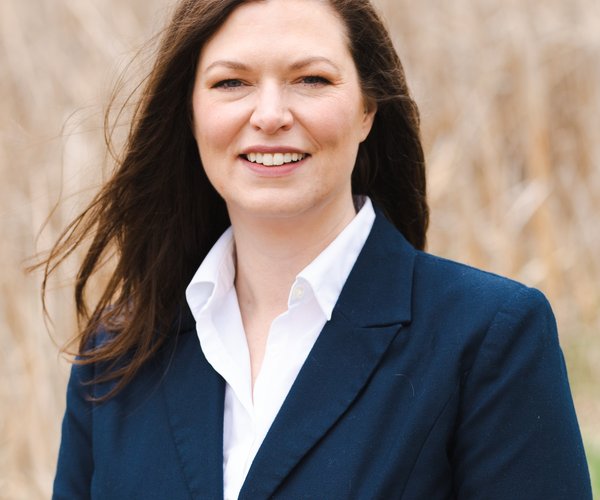
“When we announced this campaign over a year ago we did it because the status quo was failing our communities. Our schools and hospitals were closing, prices rising, and the legislature was failing to act,” said Senator-elect Jacobson, who was serving as the 50th Assembly Representative. “This week voters across Southwestern Wisconsin rejected that status quo and voted for a new way forward for Wisconsin. I am incredibly grateful that the 17th district has placed their trust in me as their next State Senator.
Jacobson was elected by 7.6 points (53.8%–46.2%) with more than 81,000 votes cast. The 17th Senate District includes all of Green, Lafayette, Grant, Iowa and Crawford counties, as well as parts of Dane, Rock and Vernon counties.
Marklein had held the seat since 2017, and was the Senate Co-Chair of the Wisconsin Legislature’s Joint Finance Committee.
“While the election results earlier this week were not what I had hoped, I am grateful for the time I have spent serving the people of the 17th Senate District,” Marklein wrote on social media three days later. “Thank you to everyone who has supported me since I first ran for office in 2010. ... I have thoroughly enjoyed getting to know people across my district, listening to your ideas, concerns, and successes, and advocating for our communities in Madison. The 17th Senate District is filled with great, hardworking people, and I am blessed to have had the opportunity to serve you.”
He lauded how the stated faced a $3 billion budget deficit when he was first elected, while the past few years the state has had a surplus above $3 billion. Meanwhile, the state’s cuts in public education funding while funneling more dollars each year to private voucher schools wrecked operating budgets for nearly every district across Wisconsin.
The state has seen an unprecedented surge in local referendums aimed at maintaining workable operating budgets. Locally, every school district in Green and Lafayette has passed an operating budget over the past six years, except for Monroe.
For Tuesday’s election, there were 79 more ballot measures from districts across the state seeking more money from their local tax base, including eight asking for recurring monies. Forty-five of the 79 measures passed, with some by less than 100 votes — Washburn (8 votes); Lake Mills (32); Marinette (40); Lodi (61); Swallow (66); Wonewoc-Union Center (69); and Evansville (90).
The closest margin for a ballot measure came out of the Geneva J4 School District, which failed by a single vote, 298–297.
For the first time in 36 yearss, the state is also losing an entire school district. After five failed attempts at operating referendums in the past five years, the state’s School District Boundary Appeal Board voted unanimously to dissolve the Hustisford School District. All students (about 275) will transfer into the Dodgeland School District. The students are already attending Dodgeland schools this year under a tuition agreement, according to Wisconsin Public Radio.
Oemichen defeated Aleckson by over 6,700 votes (22.4%).
“I am humbled to have won the confidence of voters in the 50th Assembly District. During the campaign, I pledged to solve problems facing the state and will work very hard to do exactly that once I am sworn into the Assembly in January,” Oemichen said. “My Republican opponent Jon Aleckson called me earlier tonight. I thanked him for running an issues-oriented race and am grateful we were both able to keep things positive despite having significant policy differences. That’s a win in itself.
“Thank you to all who worked hard on my behalf during the campaign and to all voters of the 50th Assembly District. Democracy was the real winner. And, for those who voted Republican for the State Assembly, I will work hard to win your trust.”
Gruber had a closer race against Novak, who like Marklein served the role since 2017. Gruber finished with 2,956 more votes than Novak (54.6%–43.7%), while third-party candidate Nathan Tataje received just 447 total votes (1.6%).
“I want to thank everyone who showed up to cast a vote in this election, all the volunteers who supported this campaign, and my friends and family for their encouragement over the last few months. I am honored that the voters chose me to represent them in the State Assembly; this is not a responsibility I take lightly,” Gruber said. “Change does not end at the ballot box, that’s where it starts. I look forward to the work of representing Southwestern Wisconsin and fighting to make Wisconsin a place where everyone can thrive.”
Clinton Anderson (D) retained his spot in Wisconsin Assembly District 45, defeating Jocelyn Jordan (R) 12,831_8,276 (60.8%–39.2%). Mark Spreitzer (D) also retained his Senate District 15 seat, defeating Scott Fleming (R) 41,249-27,304 (57.4%–38.0%), with Independent Christopher Dean (3,368) coming up with 4.7% of the vote. Both Assembly District 45 and Senate District 15 are primarily in Rock County.
In Green County, incumbent Monica Hack was re-elected as Coroner, defeating challenger Amy Jo Walter 9,244–7,480. Melanie Leutenegger was tabbed as the Clerk of Courts ahead of Jennifer Prien (8,198–7,280).
Green County Sheriff Cody Kanable ran unopposed, as did Josh Jerry for Lafayette County Sheriff. Jerry will take over for Reg Gill, who is retiring. Linda Gebhardt (Coroner) and Trisha Rowe (Clerk of Courts) also ran unopposed in Lafayette County.

Wisconsin Races
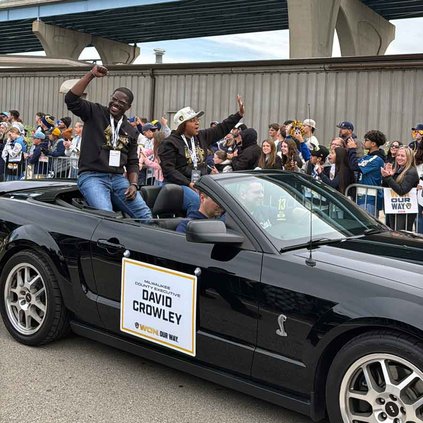
Democrats won every state-wide election — Governor, Lt. Governor, Treasurer, Attorney General and Secretary of State. David Crowley (D), a 40-year-old Milwaukee County Executive, defeated U.S. Rep. Tom Tiffany (R) by 8% to become Wisconsin’s first Black governor. Sara Godlewski (D) also won the Lt. Governor’s race by 8%. Attorney General Josh Kaul (D) was re-elected with 54.6% of the vote total. JoCasta Zamarripa (D) received 50.6% of the Secretary of State vote totals, becoming the first statewide-elected Latino officer. The first Hmong statewide elected officer, Yee Leng Xiong, was picked as Wisconsin Treasurer, flipping the seat from incumbent John Leiber (R).
Crowley replaces outgoing governor Tony Evers, who announced in 2025 he would retire at the end of his term. Crowley defeated a crowded Democratic field in the August primary following a turbulent final month. He paused his campaign with just weeks remaining before the election following straw poll numbers. Then former Lt. Governor Mandela Barnes dropped out of the race by the same token, and current Lt. Governor Sara Rodriguez dropped out due to an internal campaign funding scandal. At the urging of Evers, Crowley got back into the race, and, with a late push from the state’s Democratic Party establishment, fended off the more socially liberal Francesca Hong.
“Thank you, Wisconsin. Thank you for believing in me. Serving as your governor will be the honor of a lifetime,” Crowley said. “I promise to be a Governor that works for all Wisconsinites. Let’s get to work, folks. We won’t let you down.”
Tiffany, a fervent Trump supporter, conceded the night of the election.
“While tonight was not the outcome we had hoped for, I am incredibly grateful to the Wisconsinites who supported our campaign,” Tiffany said. “I congratulate David Crowley on his victory. We both care deeply about Wisconsin, and I wish him and his family the very best as he prepares to serve as our next governor.”
There were three ballot measures for voters to choose from: Question 1 sought to make an amendment prohibiting partial veto power to increase taxes or fees, stemming from Evers using the tool to guarantee an increase in state funding for education for the next four centuries. That passed by 1.5%.
The second question sought an amendment to prohibit the closure of places of worship during emergencies, which stemmed from the Evers and the state’s response to the COVID-19 outbreak in 2020. The measure failed by a little under 100,000 votes, or about 3.8%.
The final amendment question was to prohibit government discrimination or preferential treatment based on race, sex, color, ethnicity or national origin. That passed by a 13% margin.
State legislators and constitutional officers like Crowley, Godlewski and Kaul will be sworn in on Monday, January 4.
National Rebuke of Trump Administration
The swing to the ideological left was not felt in Wisconsin, but was a national trend. According to civicAPI House results compared to the 2024 presidential election, 94% of counties across the country shifted to the left. Trump went to social media on election night and later doubled down by telling reporters the reason for the loss was because he wasn’t on the ballot, despite the fact that two of the three times he ran for president he lost the popular vote.
After Tuesday’s election, Democrats will take control of both the House of Representatives and the Senate by more than just a couple of seats. Counting is still ongoing in Alaska and Mississippi, but both location had the Democratic candidate leading in each race as of Friday afternoon, which would widen the gap even further.
In Texas, Democrats won all major state-wide races. James Talarico (D) defeated Ken Paxton (R) — Donald Trump’s personal pick — by nearly 1.2 million votes (about 12.1%). Gina Hinojosa (D) unseated three-time governor Greg Abbott (R), another staunch Trump supporter.
In Iowa, Josh Turkek (50.51%) flipped a seat for the Democrats, knocking off Ashley Hinson. Michigan’s Abdul El-Sayed (54.54%) won despite a heated race in which Trump accused the Michigan-born doctor of being a terrorist and member of the Muslim Brotherhood. South Carolina elected Annie Andrews (D) over Darline Graham (R), the sister of longtime Sen. Lindsay Graham, who died earlier this year. Darline Graham was handpicked by Trump as well and lost by nearly 4.5%.
The South Shifts Far to the Left
Among all the Senate races, it was the American South that swung the hardest to the left compared to 2024 vote totals.
State, Trump 2024, 2026, Overall Shift
● Texas R+14 D+10 24 pts
● Mississippi R+23 Tied* 23 pts
● South Carolina R+18 D+4 22 pts
● Louisiana R+22 R+2 20 pts
● Georgia R+2 D+18 20 pts
*(note: Mississippi was uncalled as of Friday, with Scott Colom (D) leading Cindy Hyde-Smith (R) by less than 2,500 votes (0.3%) with 97% of the votes counted.)
Roy Cooper picked (58.7%) picked up a seat for the Democrats in North Carolina. Democrat Jon Ossoff (59%) held his seat in Georgia. Troy Jackson (53.1%) unseated longtime Senator Susan Collins in Maine. Sherrod Brown (50.01) narrowly flipped Ohio, and Adam Hamilton (51%) became the first liberal elected to the Senate in Kansas in over 90 years.
In Wisconsin, after three previous tries, Rebecca Cooke defeated Derek Van Orden in District 3, which covers western and central Wisconsin, flipping the seat.
Overall, Democrats won the national House popular vote by about 13 points and are on track to hold 258 seats, their most since 1993. The only other time in the last 52 years the Democrats did as well in popular House vote totals was in 1974, following President Richard Nixon’s resignation amid the Watergate Scandal. Over the same five decades, Republicans gained the majority of seats in 6 out of 14 terms, with the highest popular point total coming in 1994 (6.8%).
Several of the House seats won by Democrats came from seats gerrymandered in previously red states that were thought to favor GOP candidates. However, according to preliminary exit polling data by NBC News, independent voters swung Democrat by 17 points, 13 more than in 2024.
Virtually all demographics swung liberal as well. Black, Asian, Latino and women. Only white men (+8) and voters 65 and older (+3) voted more often for Republicans and Trump-backed candidates. Gen Z and Millennial headed the call of the blue wave and voted overwhelmingly in favor of Democrats. Voters 18-29 voted for a Democratic House candidate at a +47 margin, while voters 30-44 went at +24.
The midterms were also the most expensive election in history, with $11.6 billion spent on advertising, even more than the $11.2 billion spent on the 2024 presidential race. In Texas, a total of $570 million was spent — about half coming from nearly trillionaire Elon Musk — which is the most for any non-presidential race.
An Associated Press/NBC exit poll asked voters what were crucial or major factors in their vote. The top five responses included:
● Government corruption, 90%
● Cost of living, 89%
● Iran War, 74%
● Immigration enforcement, 73%
● A.I. and data centers, 56%
In all, preliminary counts show that about 49.4% of eligible voters in the country headed to the polls, the second-highest in a century for a midterm election behind the 50.1% that turned out in 2018.
Congressional and Senate winners are scheduled to be sworn in on Sunday, January 3, 2027.