- Of the nearly 1,000 Wis. cases, 99.2% of patients have not been vaccinated.
- Twenty positive Wis. cases have resulted in hospitalization.
- There have been 3 Wis. measles deaths; 14 U.S. measles deaths in 2026.
DARLINGTON — The Lafayette County Health Department on Nov. 24 confirmed its first death associated with the southwestern Wisconsin measles outbreak. To protect the privacy of those involved, the Lafayette County Health Department would not release additional health or personal information related to the death.
“Reporting a measles related death in our county is heartbreaking,” said Julie Leibfried, Director/Health Officer of the Lafayette County Health Department. “Our sympathies go out to the family and loved ones.” Leibfried also stated that “Vaccination is the most effective way to protect yourself, your family, and vulnerable members of our community.”
The victim was an adult. The prior two measles-related deaths in Wisconsin this year — both in neighboring Grant County — have been a child and an infant. According to the Wisconsin Department of Health Services (DHS), there have been 920 total cases in the state this year — 918 since August. Of the nearly 1,000 cases, 99.2% of patients have not been vaccinated; 57.2% of cases are children under 18 years old, with 16% specifically under age 4. Twenty positive cases have resulted in hospitalization.
According to the Centers for Disease Control and Prevention (CDC), some Americans decline vaccination because of religious beliefs or other personal convictions, while others cannot receive it for medical reasons.
Surrounded by counties with positive measles patients, there have been no confirmed cases in Green County. However, measles has been detected in wastewater in Monroe.
There have been 136 total cases in Lafayette County in 2026, 97 in Iowa County, 234 in Grant and five in Rock. While the current outbreak in Wisconsin began in southwestern Wisconsin, it has spread across much of the state, reaching 24 of 72 counties since August, with central and northern counties reaching between dozens to hundreds of case loads.
Cases in Pennsylvania and Minnesota, like Wisconsin, has seen a high rate of transmission in the Plain community, which includes Amish and Old Order Mennonites.
According to epidemiologist Ryan Westergaard, MD, PhD, MPH, chief medical officer in Wisconsin’s Bureau of Communicable Diseases, measles is also spreading outside the Plain community to other under-vaccinated groups. There is no single chain of transmission in Wisconsin — there are multiple exposures from people coming in from outside of the state, which has “been challenging,” he said.
Coming out of the Thanksgiving weekend where families and friends cross state lines to gather, experts are expecting a further rise in localized cases.
National Concern
The outbreak is not limited to just Wisconsin either. Earlier this month, the U.S. lost its “Elimination” designation status. Measles is circulating in more than 100 countries.
Texas, South Carolina, Virginia, Kansas, New Mexico, and Wisconsin requested CDC Epi-Aid assistance and worked alongside federal teams to help bring their outbreaks rapidly and successfully under control. Pennsylvania and New York have since requested CDC Epi-Aid assistance to support their outbreak responses.
There have now been 14 reported measles deaths in 2026, up from just three across all of 2025. Nine people have died in Pennsylvania, three in Wisconsin and one each in New York and Virginia.
The CDC wrote in a press release on Nov. 17: Regaining measles elimination status will require sustained national and state leadership and coordinated action across public health agencies, health care providers, laboratories, and communities. We will continue to strengthen data sharing, support outbreak response, and hold ourselves accountable for measurable progress.
“The measles elimination designation is not what protects Americans. Vaccination does,” said Dr. Erica Schwartz, CDC Director. “We know where transmission is occurring and we’ve invested $100 million in state and local health departments to reach those communities. Losing a designation doesn’t mean we abandon an evidence-based approach. It means we remain focused on stopping outbreaks.”
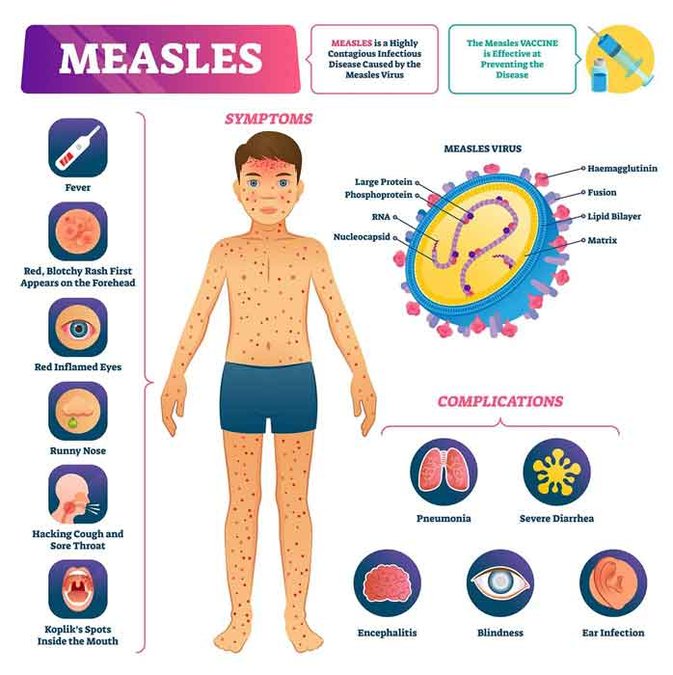
Measles is not a harmless childhood illness. Measles is highly contagious and can cause serious problems, including pneumonia, brain swelling, hospitalization and death. Measles can be more severe among infants, pregnant people, older adults, and people with weakened immune systems.
The disease was all but eliminated in the country following a vaccine introduced nearly 80 years ago. In 1919, there were nearly 13,000 deaths in the U.S. out of about 180,000 cases. By 1940, there were just 681 deaths, and in 1968, just 24. That same year, there were just 22,231 total cases in the U.S., down from a high of 894,134 in 1941. In 1993, there were just 312 total cases and zero deaths — the lowest on record to that point. The total cases stayed around that number (and under 1,000) every year after that for almost 30 years, with a low of 37 cases in 2004. In 2019, there were 1,274 total cases and one death, but just 13 cases and no deaths during the COVID-19 outbreak in 2020.
More recently, in 2023 there were 59 positive cases in the U.S., 285 in 2024, then 2,289 in 2025 and currently more than 6,000 so far in 2026.
“This is one of the reasons that we want to eliminate measles from the whole community through universal (vaccination),” said Westergaard, during a press briefing on Nov. 24.
Two doses of the measles vaccine are 97% effective against infection.
Prevention Is Key
Since the outbreak began in August, DHS has distributed close to 3,000 doses of MMR vaccine to local jurisdictions responding to confirmed cases and has distributed 13,660 doses to Vaccines for Children providers statewide. Health care providers statewide continue to provide MMR vaccine to Wisconsin residents. Since August 2026, there have been over 55,419 doses of MMR vaccine administered to Wisconsin residents.
The Lafayette County Health Department continues to work with the Wisconsin Department of Health Services, other Wisconsin county health departments and partners, health care providers, and agencies across the county in response to the ongoing outbreak.
Prevention is the key to stopping this outbreak. What residents should do to help:
● Check vaccination status. Confirm that they and their children are up to date on measles, mumps, and rubella (MMR) vaccination. Two doses of MMR vaccine provide strong protection against measles.
- ○ Check vaccination status using the Wisconsin Immunization Registry: https://www.dhfswir.org/PR/clientSearch.do?language=en
- ○ If you are not vaccinated, make a plan to get an MMR vaccine. The MMR vaccine is available at area clinics, local health departments, and some pharmacies.
- ○ Call your doctor or local health department if you have questions regarding the MMR vaccine or your vaccination status.
● If you have been exposed, watch for symptoms. Symptoms may begin 7 to 21 days after exposure and can include fever, cough, runny nose, red or watery eyes, and a rash that usually starts on the face and spreads downward.
● Call before seeking medical care. If you develop symptoms or believe you were exposed, call your health care provider, urgent care clinic, or emergency department before arriving. Calling ahead helps facilities take steps to protect other patients and staff.
Stay home when sick. Anyone with symptoms consistent with measles should avoid work, school, childcare, public gatherings, and health care waiting rooms until they have spoken with a medical provider or public health official.
For more information about the ongoing outbreak visit: Measles case count dashboard at https://www.dhs.wisconsin.gov/immunization/measles.htm And at https://www.dhs.wisconsin.gov/outbreaks/index.htm.