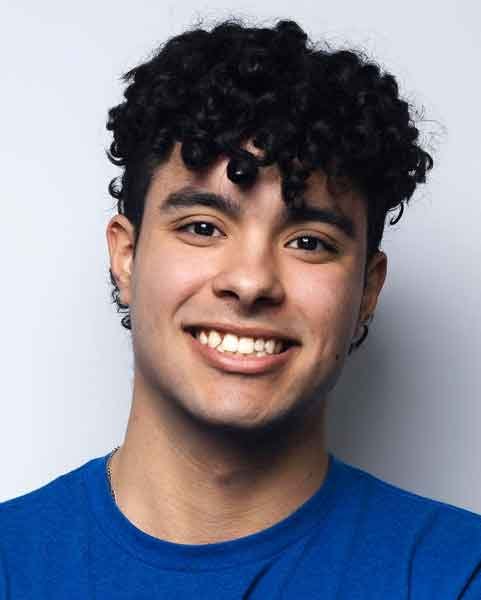
Personal trainer; program success manager
American Solidarity Party
Age: 24
Elected Experience:
None
Q&A with the Candidate
Why should voters elect you?
Voters should cast their ballots based on a properly formed conscience, even if that means not voting for me. I would rather lose while upholding my genuine principles than win by compromising my ideals. In a race where every candidate claims to be an independent voice, only I have truly walked that path by foregoing the comforts of a partisan base. We must not allow candidates to pose as non-partisan populists while accepting funding from establishment party machines. The two-party system offers only two sides of the same coin. By running as a truly independent candidate, I demonstrate that every person in my district will be listened to sincerely. My sole motivation is the welfare of my constituents, not corporate PACs, lobbyists, or partisan agendas.
What is the top issue in your district? How would you address it?
Sovereignty. Sovereignty in how our land is used, how are taxes are used (and collected), Sovereignty in how our municipalities operate, etc. To address these issues, I would work to repeal statist-based standards like Dillon’s rule. I would also introduce and work toward legislation that allows for tax choice for a portion of the income taxes paid by individuals. Furthermore, I would fight for routine third-party/independent audits of all state/taxpayer funded agencies and departments, as well as require maximum transparency for legislators, beginning with closing the archaic loopholes that allow legislators to freely delete any and all records of communication, phone, email or otherwise.
How should Wisconsin government operate differently than in the past?
Wisconsin government should operate on the principles of widespread economic ownership and true local control. The current two-party duopoly maintains a top-down funding model that prioritizes state-directed programs and corporate subsidies over the self-sufficiency of ordinary citizens. We must dismantle this centralized paradigm. Government should empower individual taxpayers by allowing them a direct say in how their state tax dollars are allocated to vital local services. Furthermore, the state must stop using eminent domain to seize private land for unregulated commercial developments, and instead invest in tools that turn wage earners into community equity owners. True solidarity means putting the homestead before the political machine.
What is your favorite fun Wisconsin history fact?
Definitely the fact that the Green Bay Packers are the only community-owned, “nonprofit” franchise in the NFL. Although the NFL banned community ownership of NFL teams back in the 1960s, it didn’t apply to Green Bay because they were community-owned long before these rules were enacted (community-owned since 1923 — almost 40 years prior to the 1960 rule change!) This exception of wide-ownership of an NFL team is even dubbed “The Green Bay Rule”! (Although in the NFL bylaws it is officially titled Article V, Section 4.)
Top 10 donors, as compiled by Wisconsin Watch: ● Charles Jenkins — $375, Total transactions: 1
● Jeffery Goldwasser — $200, Total transactions: 2
● David Bovee — $100, Total transactions: 1
Data last updated on Oct. 8, 2026.
The following is a Q&A submitted by Nathan Tataje to Morris Media of Wisconsin, the owner of the Monroe Times.
My name is Nathan Tataje, and I am a working-class citizen, first-generation American, and candidate for the Wisconsin State Assembly in District 51, where I registered and cast my ballot from the Town of Arena in Iowa County. My upbringing was shaped by my family’s immigrant background and a personal journey across the American Midwest. My dad Dr. Daniel Tataje, emigrated from Peru, and my mom, Scarlet Tataje, arrived from Nicaragua at four years old. My worldview is rooted in personal ownership, family stability, and civic duty.
I spent my formative years from ages five to eighteen in the Madison area, gaining an understanding of Wisconsin’s regional dynamics. Between the ages of eighteen and twenty-two, I lived in the industrial Tri-State region encompassing eastern Ohio, northern West Virginia, and western Pennsylvania—including Steubenville, Weirton, and the greater Pittsburgh area. Witnessing the structural decay, job displacement, and social erosion of the Rust Belt provided me with direct insight into the vulnerabilities of working-class communities when manufacturing and localized capital vanish. Choosing to return to Wisconsin, I settled in rural Arena, where I have been committed to protecting Southwest Wisconsin from similar economic decline.
My qualifications for the Wisconsin State Assembly stem from real-world labor, organizational leadership, and community service. Unlike career politicians whose backgrounds are situated in legislative staff work or partisan administration, my perspective is grounded in the daily economic realities facing working-class households in District 51. My professional experience includes operational management within healthcare service environments and labor coordination, giving me direct insight into small-business administration, employee relations, and service delivery. I am a Certified Personal Trainer and work with and alongside men in the Fathers For Christ program as the Program Success Manager, where I lead membership recruitment/retention, onboarding, event coordination and program development.
I serve as the recently elected Grand Knight for the Knights of Columbus Council 7811. In this role, I oversee local charitable initiatives, youth programs, and fraternal support networks across northern Iowa County and western Dane county, grounding my public service in Catholic Social Teaching, subsidiarity, and community care.
Economy and Cost of Living
District 51 faces significant cost-of-living pressures driven by inflation, rising utility rates, housing costs, and stagnant wage growth. Approximately 60% of households in the district earn less than $100,000 annually, trapping many working families in a “Wage Trap” where incomes are too high to qualify for state welfare programs but too low to build generational wealth or secure affordable housing. Simultaneously, corporate consolidation and out-of-state private equity firms continue to acquire local businesses and agricultural land, extracting wealth from Iowa and Lafayette counties and transferring it to metropolitan financial centers.
To address economic instability and promote widespread property ownership, I propose a Distributist economic platform centered on the “Family Security Dividend” and the “Worker-Owner Transition Fund”. The Family Security Dividend is a 24-month pilot program delivering a $300 monthly direct stipend for families making under $100,000 annually. This initiative functions as a “Shareholder Dividend” that returns state budget surplus capital directly to working households, generating an estimated $14.4 million in annual local spending across District 51. The program is funded without new taxes by sunsetting the Manufacturing and Agriculture Credit (MAC) for corporations with over 500 employees—a $400 million annual tax expenditure of which 76% currently flows to individuals earning over $1 million per year.
To protect local business infrastructure, I champion the Worker-Owner Transition Fund, a $300 million revolving fund providing 0% interest succession loans to employees seeking to buy out retiring business owners. This mechanism grants workers the right of first refusal to convert retiring enterprises into worker-owned cooperatives or Employee Stock Ownership Plans (ESOPs), ensuring capital, equipment, and profits remain anchored in local communities.
Healthcare Access and Medical Sovereignty
Southwest Wisconsin is experiencing a severe contraction in rural healthcare infrastructure, resulting in expanding “maternity deserts” and prolonged emergency response times. Expectant mothers in parts of Lafayette and Iowa counties must drive over 45 minutes to access obstetric care due to regional clinic consolidations. Meanwhile, independent physicians and local health systems are squeezed by corporate hospital monopolies and restrictive state regulations.
My healthcare platform, such as the “Rural Healthcare Sovereignty Act,” addresses these shortages by restoring local competition and expanding direct provider networks. First, the plan repeals Wisconsin’s Certificate of Need (CON) laws and bureaucratic licensing barriers that allow large hospital conglomerates to block independent practices from opening rural birthing centers and emergency clinics. Second, it allocates $400 million from the state surplus to seed a Healthcare Cooperative Revolving Fund, providing zero-interest capital for communities to establish member-owned, non-profit healthcare cooperatives.
Additionally, the platform deploys mobile prenatal and pediatric health units funded through Wisconsin’s allocation of federal Rural Health Transformation grants to deliver door-to-door maternal care across rural towns. To remove economic barriers to family formation, I advocate for making pregnancy, prenatal care, childbirth, and neonatal services completely or as close to free at the point of care through state healthcare subsidization and provider network grants.
School Funding
Rural school districts across District 51 are caught on a “Referendum Treadmill,” where rigid state revenue limits force local school boards to repeatedly petition property owners for tax hikes just to maintain basic classroom operations, bus routes, and facilities. Recent school closures—such as Arena Community Elementary in 2018 and the River Valley Early Learning Center in Plain in 2025—demonstrate that the current state equalization aid formula systematically disadvantages low-density rural districts with declining enrollments.
My educational centerpiece is the “Rural School Endowment,” a permanent, state-administered trust designed to eliminate local school property tax burdens. The state allocates $800 million from the General Purpose Revenue (GPR) budget surplus into a restricted-use trust fund. Assuming a conservative 6% annual return, the trust generates approximately $48 million in perpetual annual dividends restricted to rural school districts with fewer than 1,500 students. Distributed across the 24,309 households of District 51 as a “Reverse Levy,” this dividend yields an estimated $2,000 annual property tax abatement per primary residence while permanently stabilizing rural school budgets.
Beyond structural finance, I advocate for educational quality by restoring curriculum transparency, supporting diverse schooling options (including public, private, and home schooling), prioritizing teacher compensation over administrative bloat, and curbing the overuse of classroom technology to re-emphasize trades, life skills, agriculture, and civic virtue. I do not believe the school voucher programs are antithetical or incompatible with public education. In fact, the financial math shows that school districts are funded net-positively when students utilize school choice vouchers.
Voters need to know that a student utilizing a voucher actually leaves more public dollars behind for the students who stay in the public system. In Wisconsin’s current funding formula, when a student transfers to a voucher school, the public school district is allowed to adjust its revenue limits and keep a portion of the tax levy funding associated with that student. They have fewer students to educate, but they retain a financial buffer. This means the per-pupil spending on the remaining public school students can actually increase. Public schools in Wisconsin collect an average of roughly $14,104 per student in combined property taxes and state general/categorical aid. Meanwhile, K-8 vouchers cost the state $10,877, and high school vouchers cost $13,371. When a family chooses a private school voucher, they are voluntarily educating their child at a lower cost to the state than if that child attended a public school.
Environmental Stewardship and Citizen Protection
The ecological integrity of the Driftless Area is threatened by corporate land acquisitions, high-density industrial solar and wind developments, top-down state preemption laws, and the emerging expansion of hyperscale data centers. These water- and energy-intensive data center facilities consume millions of gallons of groundwater daily, threaten municipal aquifers, and require transmission line buildouts that drive up electric utility rates for residential consumers.
To protect local ecosystems and agricultural land, I will introduce the “Data Center Sovereignty and Ratepayer Protection Act” alongside the “Home Rule Restoration Act”. The Data Center Sovereignty Act imposes a statewide moratorium on data center construction exceeding 20 megawatts or 10,000 square feet until strict environmental safeguards are established. The Act strips utility corporations of eminent domain powers under Wisconsin Statutes Chapter 32 when acquiring land for transmission lines built primarily to serve private commercial data centers. It creates a separate “Hyperscale Ratepayer Class,” legally requiring developers—rather than residential ratepayers—to pay 100% of grid expansion costs, bans municipal nondisclosure agreements (NDAs), and mandates a binding local referendum for any project exceeding $10 million in value.
Complementing this, the Home Rule Restoration Act repeals state preemption laws that prevent town and village boards from regulating local land use, solar arrays, and environmental hazards like PFAS contamination. To preserve agricultural land, I propose strict caps on corporate and out-of-state land ownership, paired with 0% interest state succession loans for young farming families engaging in regenerative agriculture.
Women’s Rights and the Whole-Life Framework
The debate surrounding women’s rights and reproductive health is frequently framed around a rigid dichotomy between legal restrictions and secular access. I reject this divide, advancing a “Consistent Ethic of Life” that integrates legal protections for the unborn with social supports for mothers, children, and families. I am the only non-Republican candidate in the entire state of Wisconsin in any election to be endorsed by Pro-Life Wisconsin this year, and for good reason. He does not believe pro-life is only equivocal with being anti-abortion or simply being “pro-birth”.
Under the “Whole Life” framework, true support for women requires eliminating the economic, medical, and social pressures that lead to systemic vulnerability. I advocate for constitutional and legal measures establishing the right to life from conception to natural death, while simultaneously constructing a comprehensive social safety net. My platform wants to guarantee low-cost to free maternal and neonatal care at the point of delivery, subsidized doula care to combat maternal mortality, expanded paid family leave, and universal access to affordable mental healthcare.
By pairing legal protections with the $300 monthly Family Security Dividend and universal prenatal care, my platform addresses the root economic causes of crisis pregnancies, ensuring that no woman in District 51 considers abortion out of financial desperation or lack of community support.