With the end of Child Care Counts and Bridge payments coming soon, both child care providers and the families they serve will be feeling major after effects — mostly the rise in weekly cost. The government subsidies, which made a huge difference during the COVID-19 pandemic and in the years since, have provided a lifeline for both the providers and the families.
Without it, providers will have to raise rates in order to pay for the rising cost of insurance, as well as having a living wage. That means families will have to fork over more of their limited funds in order for both parents to continue to work.
It’s a problem that has been a long time coming.
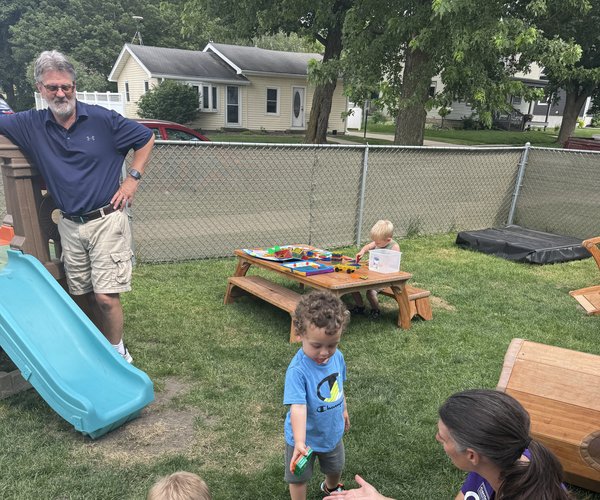
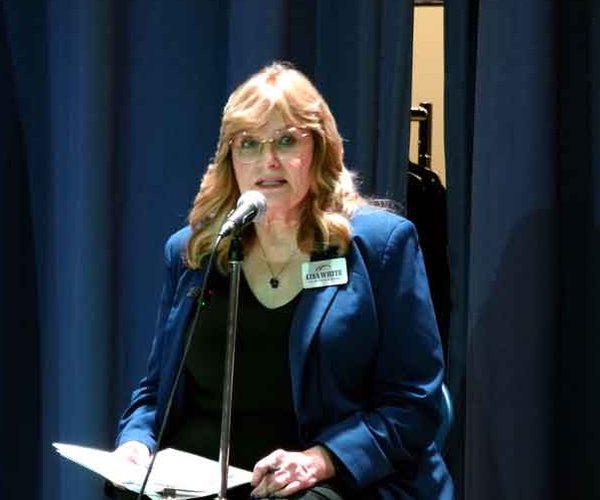
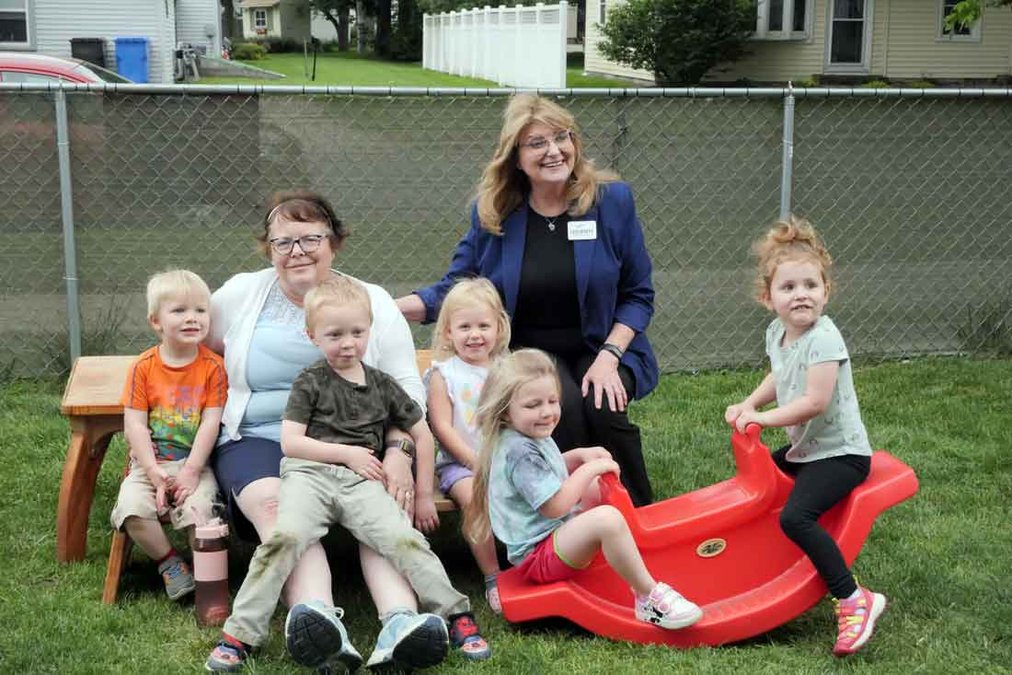
Adding consistent money to the state’s budget for childcare — or even public education — has been a taxing toll for advocates and educators. Currently, District 17 Senator Howard Marklein (R-Spring Green) is the co-chair of the Joint Finance Committee and has a huge sway in the state’s allocation of funds. Running against him this fall are three Democrats, all females, who first must make it through the upcoming August primary. Those candidates include Rep. Jenna Jacobson (Oregon), educator Corrine Hendrickson (New Glarus) and businesswoman Lisa White (Potosi). White stopped by Christina’s Family Daycare in Monroe on June 19 to talk with owners Christina and Tom Becker, as well as Jillynn Niemeier about the budget issues hampering the industry.
Christina Becker is a certified childcare provider and has been in business for more than 30 years. Niemeier, owner of Blue Door Daycare and the president of the Green County Childcare Network (GCCCN), which supports both in-home and group centers, started her in-home care in 2020 when she had a 2-year-old and a 6-month-old.
“We were also dealing with COVID, and so there was no one with openings except for unregulated child cares,” Niemeier said.
Among the challenges of having a family home setting is that “if we take a day off, we’re closed. We don’t have a sub.”
She said that, generally, if the provider or a family member has a doctor’s appointment, scheduled surgery or otherwise, the operation has to close for the day, leaving the parents without child care. Meanwhile, at a center, there is other staff that can fill the gaps.
“If we don’t have subs, then our families have to have backup care,” Niemeier said. “I will say that Green County has a very supportive network. The Green County Childcare Network is definitely a great resource to have.”
“It’s definitely a blessing of mentors with the other daycare providers that have been in longer than you,” said Christina Becker of GCCCN.
Niemeier previously worked at a center many years ago. She said staff is rotating through those classrooms all day long.
“I have nothing against group centers. I think that some kids thrive in a group center, and some kids don’t thrive with them. Some will do great with the mixed age, and some people do better when it’s all the same age,” she said. “I think it’s a great option to have both, then you pick whatever suits you.”
One of Marklein’s touted childcare “wins” is the new multi-million dollar facility at Southwest Health in Platteville. The center will provide childcare for a large number of southwestern Wisconsin families and will staff a strong number of childcare workers. However, the company running the operation is based out of Minnesota.
“How are you staffing that?” Niemeier pondered. “Where are you getting your staff from? You’re pulling from the centers, the small centers that can’t provide the healthcare, that can’t provide the paid time off, that can’t provide the higher wage, right? So now those other centers are even more short-staffed.”
White carried on, “If you lose your small town center, then all of a sudden you have to drive 15 to 20 miles to a center.”
“Yes, we’re going to need more classrooms eventually, but right now we have classrooms empty. We need to fill them with teachers so that we can bring the children in,” Niemeier added.
White said she believes a cooperative model would be the best moving forward instead of a competitive model, perhaps even different that the Vermont plan, which takes a small percentage of tax from all businesses in the state to pay for the program.
“People are hungry for a cooperative model,” she said. “I think we need a hybrid model, and the state needs to step it up.”
The fall primary is scheduled for Tuesday, August 11. Absentee ballots will go out in advance, and early in-person voting is available from July 28 until August 9.
The general election will be Nov. 3, with in-person voting from Oct. 20 to Nov. 1.