The ruby-throated hummingbird is the only hummer who nests east of the Mississippi River. Ruby-throats migrate to Wisconsin in May and leave, males first, in September.
Migration routes may vary with some birds flying directly across the Gulf of Mexico, while others take the coastline route.
A few winter in the southern tip of Florida instead of journeying directly all the way to Central America and back again.
This birds’ energy comes from consuming insects, nectar, and stealing sap from the wells drilled in the bark of trees by sapsucker woodpeckers. In addition to stealing from sapsuckers, ruby-throats also pick insects from the webs of spiders but it has been noticed that webs, which are also used as nest building material occasionally trap hummingbirds.
While anything red attracts hummingbirds, blue salvia flowers are also a favorite as is any red feeder offering sweet fluid. Observations have confirmed that some birds were executed by farm pasture electric fences that were attached to posts with red insulators. Most insulators are no longer red but instead white.
Information on life expectancy suggests males can live up to five years.
Data, statistics, tiny size, speeds of travel, and flight abilities are a few of the reasons hummers are so interesting and attractive to those who feed and watch birds.
Pre-mating antics are unmistakable, even when first seen. Turkey hunters, often alert to any animal movement in forests, see for the first time a male hummingbird moving through an arc of 180 degrees as though hanging from a pendulum and then dropping to the ground and mating with the female hummingbird.
Like a number of birds, the hummer’s common name applies to the throat or gorget of the male, but not the female, and reflects fiery red-orange colors while in direct sunlight but nearly black with a turn of his head.
Many birders and others never encounter a hummingbird nest, as small as a walnut, saddled on a downward-leaning branch, and camouflaged with lichens but just large enough to accommodate two bean-sized eggs and an adult female.
The female seems to do all the work, nest building and maintenance, incubation for two weeks and then feeding and brooding until the babies fledge in 28 days.
Not to worry, many of a bird’s nonvocal sounds are recorded by apps such as Merlin and identify a ruby-throated hummingbird.
The Wisconsin hummingbird is the smallest of the small and has the widest range of any hummers.
Size does not faze “ruby” as he dives at crows and bald eagles who fly over their territories.
Size sometimes gets this bird into trouble when dragonflies, praying mantis, and frogs take the bait.
Some of the best attractants, which also improve close up photographs, are tiny bare twigs, wires, and metal yard art as perch places near feeders, or not.
For a tiny organism there is a lot to see, hear, watch, and marvel at from first light to near dark.
While prairies are not the best habitats for this bird, a stream or other water through the habitat brings the hum of their wings, chirping, and squeaking at dawn.
Blue, day-long spiderwort blooms, and pale purple coneflowers and yellow coreopsis heads are heads are opening. The parade of colors continues to go on for the remainder of summer and autumn. Birds and insects, and if water is there, pickerel frogs are also about and it’s a good location to see a viceroy butterfly, a near look-alike to a larger monarch.
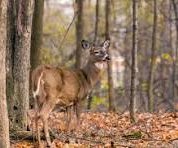
White-tailed deer continue to be more obvious and unfortunately more mobile running in and through traffic. Fawns, as tiny as a puppy but with longer legs are following mother. Adult deer are in their red-brown beauty coats and bucks are growing antlers at an amazing rate. Bachelor groups are playing “reindeer” games of chasing, racing, and shallow boxing but being careful of antler-to-antler contact.
Bluebirds are working on second clutches so caution is advised in cleaning boxes.
Watch the first fruit of the season. Mulberries, then black raspberries and finally blackberries are all showing signs of bumper crops if rain-ripening and enlargement are ample.
Garden and farm strawberries are approaching with ever-popular peck-your-own options in places, as places for fruit or jobs.
Ticks and tick-caused and carrying diseases are omnipresent.
First crop cutting, conditioning and curing alfalfa made it under the wire before much needed rain. But with haying, animal casualties happen. Fawns were taken and some by leashed dogs, too.
Panfish action is good in places; food for thought.
— Jerry Davis is a freelance writer who lives in Barneveld. He can be reached at sivadjam@mhtc.net or at 608-924-1112.