MONROE — The Green County Land and Water Department (LWCD) wants to share information with livestock owners to save money, recycle nutrients on the farm, and give them another tool for water quality practices they could implement. Most people realize that if you have livestock, eventually you’ll have deadstock. Some farmers are able to pay a dead truck to come and take the deadstock away to be properly disposed of, while others choose to dispose of them in other ways.
Unfortunately, there are many that take the animal to the back part of their property and pile them- leaving them for nature to decay or scavengers to consume them. This method is actually the riskiest environmentally and for containing disease transmission on the farm. The LWCD would like to offer another option — composting.
The composting process is rather simple. Create a base of 18-24” of high carbon materials like wood chips or shavings. Lay the carcass on the base, making sure there’s 2’ all the way around the animal to the edge of the pile. Then cover the carcass with a 24” thick layer of a biologically active high carbon material like bedding pack, waste feed or active compost. Make sure the pile is mounded so any precipitation sheds off the pile. Let it sit for 4-6 months before checking to see if the carcass is fully degraded. The material can be reused or land applied. Large bones will likely take longer to break down. Site cleanliness is important to deter scavengers, control odors and keep good neighbor relations.
The Green County LWCD wants farmers (or anyone with livestock) to know that it is legal to compost their mortality in Wisconsin and wants to encourage more farmers to properly compost on the farm. The Wisconsin DNR cites 95.50 of state statutes that a carcass owner or landowner cannot leave a carcass exposed for more than 24 hours April through November or no more than 48 hours December through March if they know of the carcass. On-site farm composting of animal carcasses is legal as long as only carcasses, manure, crops residues and clean chipped wood are composted. It all has to come from the farm its composted on and used as fertilizer on the farm, it may not leave the farm. And if wood chips from off site are used it can’t exceed 10,000 cubic yards.
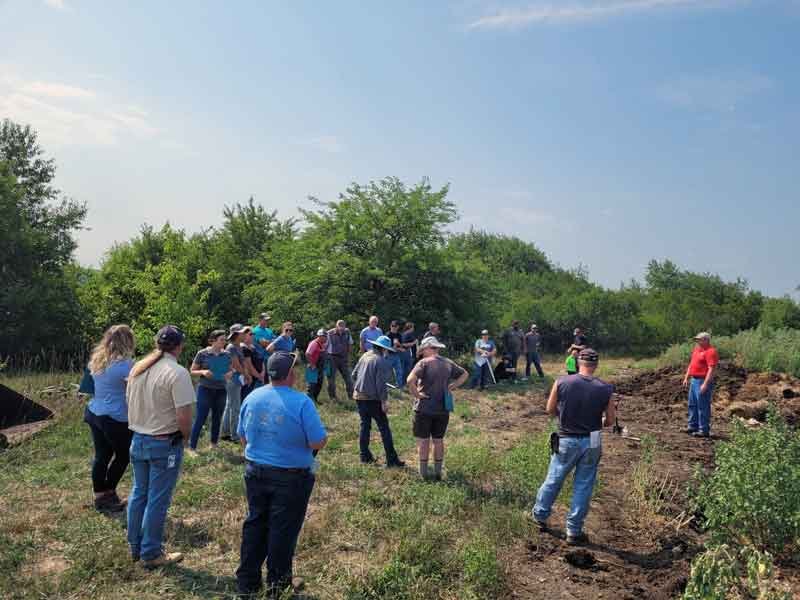
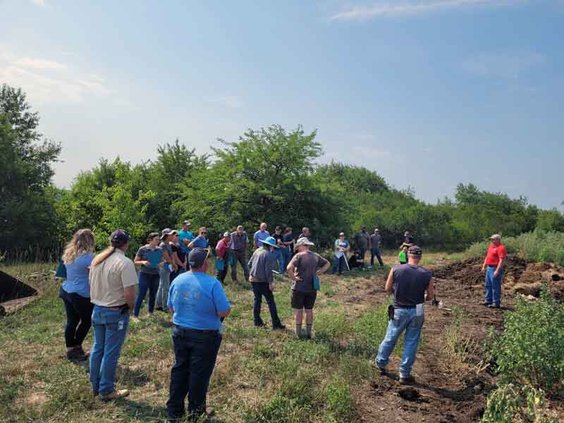
Last spring, a Monroe High School LAUNCH class edited and created videos to highlight the composting practice and showcased the field day that was held in August of 2023 by the LWCD on the subject. To view the videos, search online for “Green County LWCD mortality composting”. For any questions, contact Tonya Gratz with the Green County LWCD at 608-325-4195 ext 2684.