The American elm, commonly called white elm, continues to inject its flowers, fruits, pollen and diseases to the lives to other organisms during May and beyond.
Morel hunters need elms dying or dead. Squirrels need live, flowering and fruiting trees, unless they need a hollow tree for raising a litter of kits. The elm bark beetle needs healthy trees to infect with the Dutch elm disease fungus. The morel fungus needs healthy elm roots to grow into to form a mycorrhizal association.
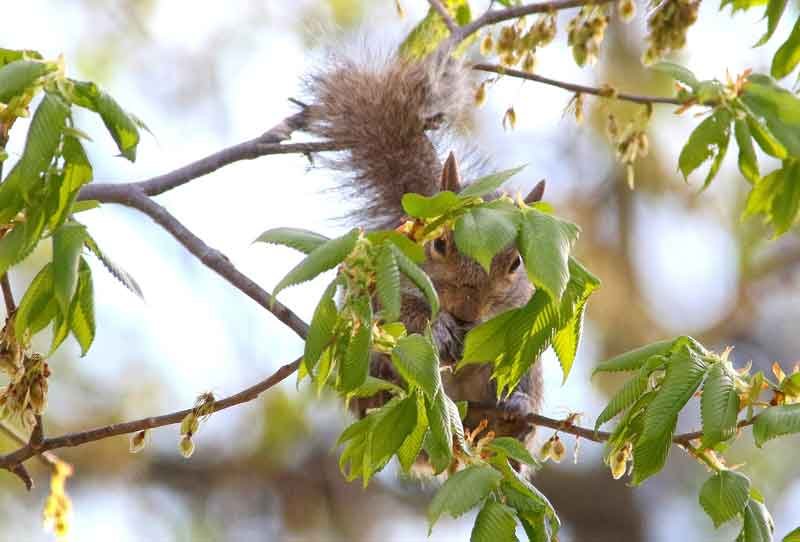
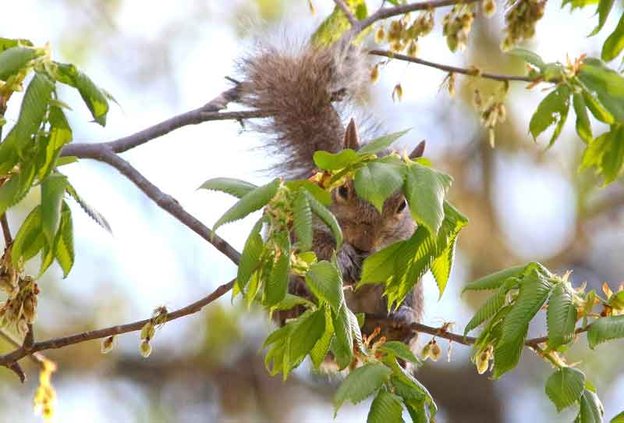
Flowers wind-borne pollen we may breathe in as spring begins leads to pollination initiating “elm nuts” too small for most to notice. Hungry gray squirrels who run out of buried nuts notice the tiny morsels as an even smaller seed is tucked inside a fluttering elm fruit, an akene botanists call them.
This year particularly, because many of the maple tree flowers froze and dropped before pollination, the encased elm seed was just enough to send dozens of grays up still living elms to clip fragile twigs. Not bothering to watch where they fell, they go down the tree and have an early spring lunch.
More commonly, if there is a scurry of grays about, they are more protective by doing acrobatics along the tiniest of tree twigs. Each seed is removed from the still-green fruit and the vegetative material drops on the road, driveway or forest floor.
More than likely this elm will soon die of Dutch elm disease, spread by an elm bark beetle carrying the elm disease fungus. This stimulus is enough to awaken the morel fungus growing among and inside the elm roots signaling time has come to move on, produce spores before dying and send the spore package, a morel mushroom, up out of the ground with “hope” a morel picker does not find it before the spores blow in the wind toward healthier elm or apple trees.
In recent past years, morel pickers have been disappointed in the process and the picking has waned as elm tree populations have diminished.
A few are speaking of grand morel picking this spring but Tom Howard makes the comparison to the three previous years by saying anything would be better than last year.
The gray squirrel will have to find another emergency seed source when the tree dies and the spore will need another living elm tree to connect with and the morel hunter will need to finds another dying elm as a mushroom source.
Pollen sources, like goldenrod herbs, corn tassels and pine tree pollen cones often get blamed for causing hay fever even though they are not the culprits.
Most flowering plants produce flowers that give up pollen and then seeds inside dry or fleshy fruits, which is what the squirrel is after if the flowers are on oaks, walnuts, hickories, chestnuts, or corn.
Conifers are different; while they do not have flowers or fruits, they have cones that carry one of the reproductive steps in a plant’s life cycle.
The gray squirrel may visit a white pine seed cone in its second year of development and dig into the hard, green cone for a pine nut.
Usually the gray squirrel will wait for the seed to drop from the cone and pick it up under a white pine tree in October. The seed cone may fall at the same time or later and be picked up by someone needing tinder to start a fire or to decorate a wreath.
Even understanding these life cycles will do little to explain way the morel season was earlier, maybe shorter, and no more productive this year than the last three.
The gatherer, or an occasional picker, may need to have other goals, set other expectations, or marvel at the unusual.
One huge morel, greater than nine inches, grew pinned down by a bramble cane and grew sideways instead. It turned out to be two morels coming above ground and then grew with one top.
Two large old elms gave up 99 percent of the several hundred morels a gang of three hunters found. Had they missed those two trees, there would have been no morels to sell, gift or eat.
A fall mushroom, maitake, seems to be easier to find and still tasty, easy to identify and one mushroom will equal 50 morels. Hen of the woods, is another name for Maitake. Oaks are the partner to this fungus, not elm, apple, aspen and some prairie forbs. Old morel gatherers will not be disappointed with maitake.
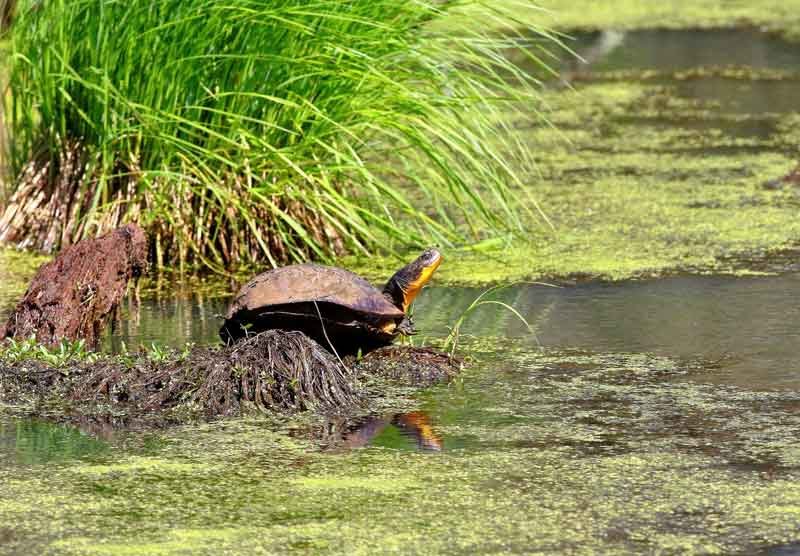
Instead of hunting morels, try calling turkeys, finding Wisconsin’s showy orchis, woodcock nests, or wild asparagus. Set up a bluebird box trail. Befriend a small marshy pond where a green heron or turtle can be seen and photographed.
— Jerry Davis is a freelance writer who lives in Barneveld. He can be reached at sivadjam@mhtc.net or at 608-924-1112.