BLANCHARDVILLE — To hear an owl out in nature can be, either an enchanting moment, or a scary one, depending upon the situation and individual. The traditional ‘hoot-hoot’ or the longer call ‘whoooooo’ are sounds that can echo in the dark forests of Wisconsin. Each species of owl has their own calls, vocabulary, and ways to communicate. That’s just one fun fact about owls that guests will learn at the upcoming nature program “It’s Almost Time for Owls” coming up this weekend at Yellowstone Lake State Park, 8495 Lake Rd., Blanchardville, on Saturday, Aug. 22, beginning at 7 p.m. The event will be held at the Amphitheater, weather permitting. A day pass or season sticker is required within the park. Please dress according to the weather, and leash all pets.
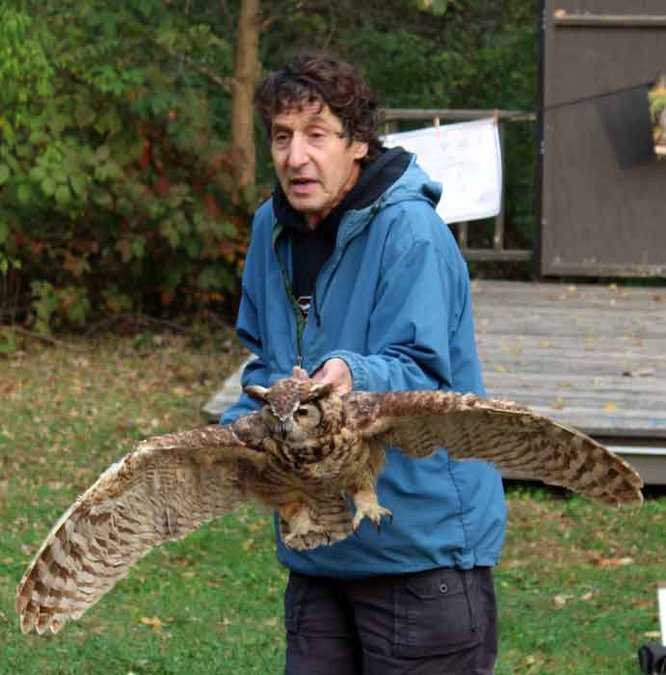
Mark Sturnick, Wisconsin DNR Naturalist and Biologist will lead the discussion. With his knowledge in field-studies, and classroom experience, Sturnick will share facts and myths of the Wisconsin owl population, the variety of species and their behaviors. Yellowstone Lake State Park has 450 acres of natural habitat which provides a home to a variety of animals, with owls being some of the most popular among guests.
Several owl species exist around the world, about 200 species altogether. There are nineteen owls in North America. Of those, 11 of the 19 species find Wisconsin to be their home. They include the Northern Hawk Owl, Short-Eared Owl, Long-Eared Owl, Northern Saw-Whet Owl, Barred Owl, Snowy Owl, Great Gray Owl, Boreal Owl, Eastern Screech Owl, Barn Owl, and the most popular and recognizable, the Great Horned Owl.
There will not be live animals at the program on Saturday, however an example will be showcased. This opportunity will give enthusiasts the opportunity to see an owl up-close, allowing the viewing of feathers, talons, and other features of the bird to be examined within close proximity. The Great Horned Owl is the taxidermy-version of a former much-loved resident of the park.
In folklore, owls have been displayed as symbols of wisdom; known for their protection in some cultures, while omens of death in others. Owls are credited as bringers of prophecy, messengers, and psychopomps into the afterlife.
While teaching about Wisconsin’s Owls, Sturnick will focus his attention on the unique attributes and abilities of owls. They have keen hearing and eyesight. Owls have the ability to hear a mouse 50 meters, or half a soccer field in distance away, if not farther. They can hear at 200 hertz, which is a measurement of sound frequency. In comparison to an owl, the average adult human can listen and hear within the range of 15 to 20 hertz. As people age, the ability to hear the higher pitched sounds diminishes or goes away altogether. Owls do not seem to lose their abilities as they age, making them specialized to hunt by sound and by sight, even into advanced maturity. Owls have extraordinary abilities to see in complete darkness. They have adapted their vision to see a small simple candle lit from a quarter-mile away. Their capability of impeccable vision and listening abilities make owls among the most successfully skilled predators among bird species.
Owls have four talons, which aid them to be successful hunters. They have two talons that are forward-facing, one is rear-facing, and the other has a flexible joint which allows them to move the fourth toe in both the forward and backward direction, similar to a human thumb. This talent allows owls to specialize between the hunter’s grasp while grabbing prey in flight, or have the ability to perch itself onto a tree branch.
Humans play a big role in maintaining the Wisconsin owl population. As owls roost in hollowed dead trees, it is important to remember this when clearing property. Humans tend to dispose of dead trees without realizing they can be home to a variety of wildlife species, including owls. Another threat to owls is run-ins with motor vehicles. Oftentimes owls, along with other birds of prey, will eat roadkill alongside the road. To avoid hitting the bird and doing damage to the animal and a motorized vehicle, it is important to remember to allow enough space for the bird to take flight from off the ground. This is the case with owls, and all large raptor birds.
Sturnick’s passion continues to spark new interest in others while maintaining the conservative efforts of Yellowstone Lake State Park, and the Wisconsin DNR. Attendance to the owls discussion or any conversation at Yellowstone Lake State Park is sure to engage interest, which can only enhance the efforts made in maintaining conservation of wildlife and the world around us.