Most people, whether Christian or not, are very familiar with the Lord’s Prayer. It is repeated in churches, at bedsides in moments of grief and during times of spiritual searching. And yet, familiar as it is, how well do we really know it? The English translation that we are familiar with comes from a series of translations. The prayer was first spoken in Jesus’ native Aramaic language. It was later translated into Greek, then Latin and finally, English. At each level, institutions and translators with specific theological and sometimes, political, interests made decisions as to what Jesus meant. As a result, those choices slowly moved the prayer away from Jesus’ original message.
In its Aramaic meaning, the prayer teaches that there is no separation between the one who is praying and the one to whom the prayer is directed. Jesus taught that there was no duality in creation. In its original language the prayer is not a petition to a deity. It is a recognition of what we each are, where we come from, what we genuinely need to live a full life and what it means to live in alignment with the Creator who we all reflect. This may be a difficult leap for some so let me give an example.
The King James version of the prayer starts out by saying, “Our Father who art in heaven.” The Aramaic text is, “Abwoon d’bwashmaya.” Abwoon is a multi-faceted word expressing an ongoing creative action — a breathing, generative force through which all life continuously emerges into existence. What an amazing and revolutionary concept! This does not describe a paternal deity residing somewhere else.
In addition, “Shmaya,” translated as heaven, is not a physical location, but rather an ever-present realm of light and harmony. It is the dimension of reality that is the source of all that we see. It is here now.
If this is difficult to accept, we can take some comfort in the fact that Jesus’ teachings were also often misunderstood by his followers. Nevertheless, the idea is completely consistent with his message. He was quite clear that “the kingdom of heaven is at hand,” although “laborers” are needed to bring it to fruition. There are 31 references to the kingdom of heaven in the Book of Matthew alone, many using parables to teach his concept of heaven.
When reading the Bible it is important to remember that the Gospels were written in Greek by Greek-speaking communities, one to three generations after Jesus’ death. These people were working from oral traditions and early written sources. Greek and Aramaic are very different languages. An Aramaic word can hold multiple meanings simultaneously. Greek, on the other hand, is quite concrete— more committed to singular meanings. As Aramaic was translated, multidimensional Aramaic meanings were lost in the Greek framework.
In conclusion, I want to be clear that the purpose of this article is not to diminish anyone’s love for the Lord’s prayer as they know it. It is a beautiful prayer. The point is that in its original language it is even more powerful and profound. I encourage any Bible student to dig into the Aramaic text. I guaranty that if it is approached with an open and curious heart, it can be transformative. That, in my opinion, is what Jesus was hoping for.
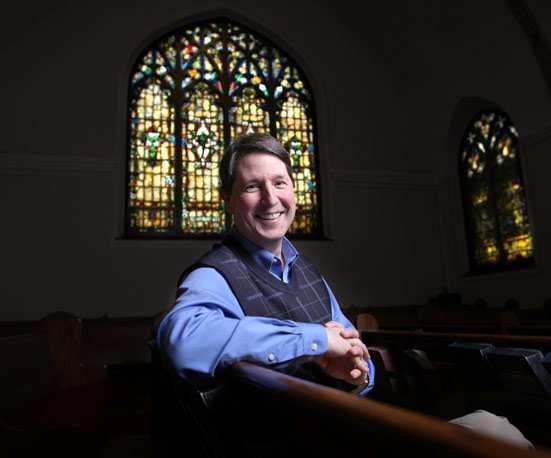
— Reflections appears regularly on the religion page. The column features a variety of local writers, coordinated through the Monroe Area Clergy Group. Charles Wellington is a lifelong student of the teachings of Christ Jesus and regularly meditates with the Great Plains Zen Center in Monroe.