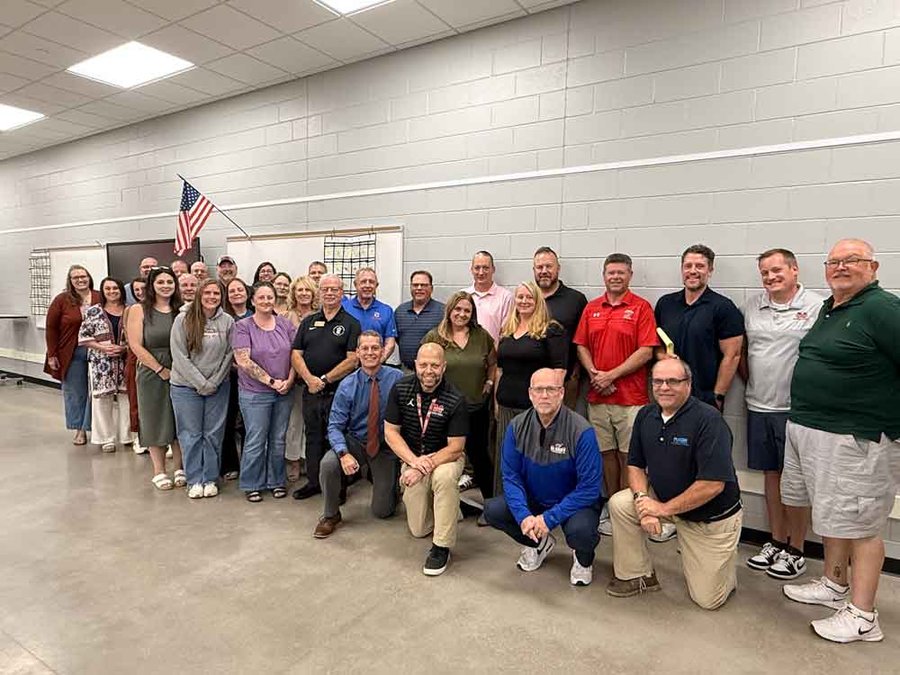
MONROE — A group of school superintendents, business administrators, school board members, and community members representing 13 school districts across southern Wisconsin met Tuesday, August 18, at Monroe High School to continue discussions about the challenges facing Wisconsin’s public school funding system and explore potential solutions.
The group, which held its second meeting Tuesday, is being formed around a shared belief that Wisconsin needs to take a fresh look at how public schools are funded. While improving the resources available to public schools remains an important part of the discussion, members emphasized that the goal is not simply to increase local property taxes or place additional financial burdens on taxpayers.
Instead, the group is interested in identifying sustainable approaches that provide schools with the resources necessary to educate students effectively while recognizing the financial pressures facing local communities and taxpayers.
During the first meeting in June, expert speakers offered insight into what’s working in other states and why change on this front has been hard in Wisconsin. Tuesday evening centered on how the group can help inform political candidates and policymakers about the shared challenges and potential solutions. Over the next few months, the group intends to engage with those vying for elected office
Jim Curran, President of the Monroe Board of Education, said the group is committed to approaching the issue from a broad perspective.
“That status quo of school funding isn’t working in Wisconsin. Our schools need a funding system that works for kids, teachers, and taxpayers. We believe there are solutions in other states. Further, we believe there are paths forward that don’t pit rural students in Monroe, New Glarus, or Evansville against students and families in Milwaukee,” Curran said.
The group intends to continue meeting throughout the coming months as it develops its organizational structure, identifies areas of common concern, and researches potential alternatives to Wisconsin’s current approach to funding public education.
Members emphasize that the effort is intended to be collaborative and solutions-oriented. The group welcomes the opportunity to share its perspectives and research with policymakers, political candidates, business and community leaders, and others interested in strengthening Wisconsin’s public education system while maintaining responsible stewardship of taxpayer resources.
The participating districts represent communities across southern Wisconsin and bring together individuals with diverse experiences and perspectives. Despite those differences, members share a common interest in developing a school funding system that is adequate, sustainable, equitable, and responsible for local taxpayers.
The group expects to formalize its organizational structure and name in the coming weeks and will continue its work toward identifying practical approaches that can contribute positively to the statewide conversation about the future of Wisconsin public school funding.