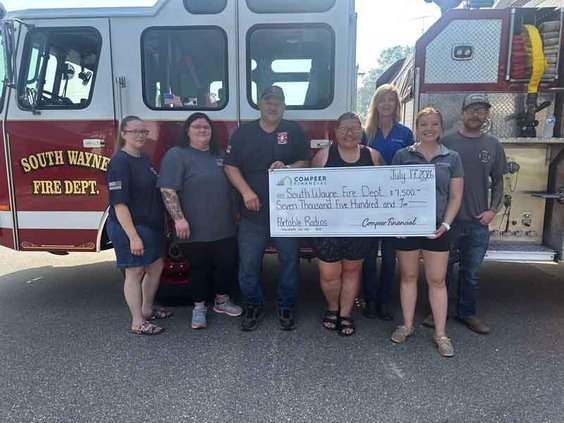
MONTICELLO — To ensure volunteer emergency response departments are equipped with technology and tools to effectively respond to rural emergencies, Compeer Financial awarded 146 departments in Illinois, Minnesota and Wisconsin grants totaling $1,015,198. Forty-five departments are first-time recipients. The Emergency First Responder Grants provide rural first responders with critical equipment that improves lifesaving capabilities, protects volunteer responders, strengthens regional emergency preparedness, and enhances the safety and resilience of the communities they serve.
There were 48 departments from both Illinois and Wisconsin and 50 departments from Minnesota that received an Emergency First Responder Grant of up to $7,500 this year.
Area recipients include:
● Belleville Fire Department: Portable AEDs
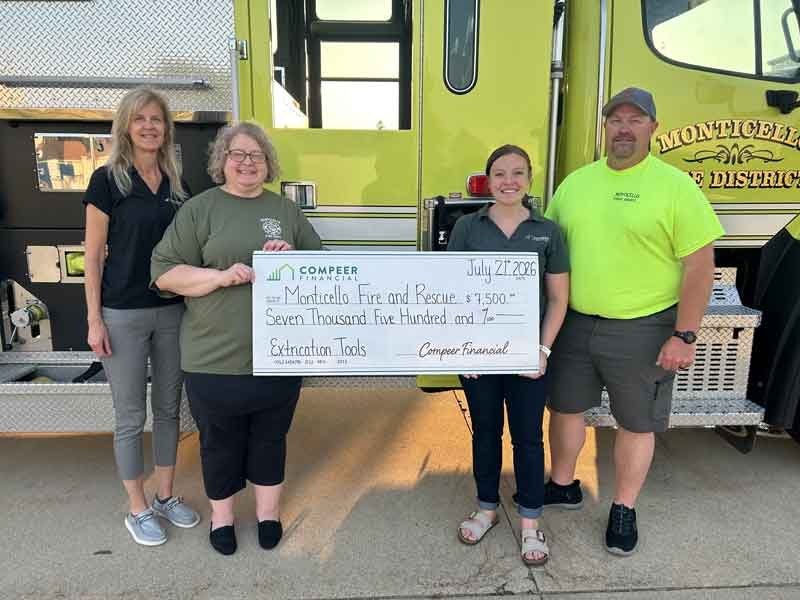
● Monticello Fire and Rescue: Extrication tools
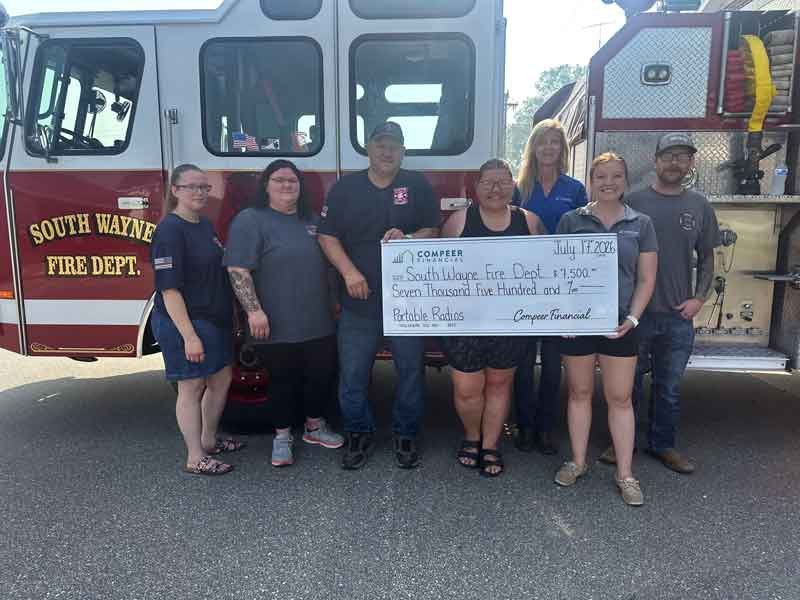
● South Wayne Fire Department: Portable radios
Responding to rural crises is becoming increasingly difficult, as departments are faced with limited funding, larger coverage areas, population demographic challenges and dated communication infrastructure. As a rural-based business, Compeer Financial understands the strain volunteer emergency response departments are under.
“As rural residents ourselves, we want to ensure our first responders are prepared to answer emergency calls. The Emergency First Responder Grants support our vision of creating a world where agriculture and rural communities are dynamic, collaborative and thriving. We’re proud to award these grants that provide first responders with important equipment, personal protective gear and technology and enhance their ability to respond to crisis situations,” said Karen Schieler, manager of Compeer Giving at Compeer Financial.
Departments will use this year’s grants to support the following capabilities:
● Improve response times and emergency care. In rural areas where transport times are often longer, having lifesaving equipment in the hands of first responders can mean earlier intervention and better patient outcomes. Many departments are using grant funds for automated external defibrillators (AEDs), cardiac monitors, radios, pagers and advanced emergency medical services (EMS) equipment.
● Strengthen firefighter and responder safety. Due to funding constraints, emergency response departments often have to choose between upgrading tools and equipment or updating safety gear. A significant portion of grant requests focus on replacing outdated turnout gear, helmets, self-contained breathing apparatus (SCBA) equipment, boots, radios and other protective equipment.
● Expand local rescue capabilities and reduce reliance on distant resources. In many rural communities, the nearest specialized rescue team may be 30-40 minutes away. Several departments are investing in specialized rescue equipment for grain bin rescues, vehicle extrications, confined-space incidents and technical rescues to help ensure life-saving capabilities are available closer to home when every minute matters.
Grants help address the unique needs of rural emergency response departments, including:
● Offset rising equipment costs. Many volunteer and small paid-on-call departments operate on very limited budgets. Grant funding often serves as the catalyst that allows departments to begin critical replacement projects that otherwise would be delayed for years.
● Enable regional emergency response networks. The benefits extend beyond the individual department. Equipment purchased through these grants is often used during mutual aid responses and shared across neighboring jurisdictions to increase interoperability and help multiple communities respond more effectively to large incidents.
● Support the vitality of rural and agricultural communities. Many funded projects directly address risks unique to rural America — grain bin rescues, farm accidents, wildland fires, water supply challenges and long EMS response distances. By strengthening emergency response capacity, the grants help protect farmers, agricultural workers, businesses, residents and the local economies that depend on them.
Since beginning the Emergency Response Grants in 2018, Compeer Giving has provided more than $5.75 million in grants to equip volunteer first responders with the equipment and tools needed to aid rural residents across Compeer’s 144-county territory. The Emergency First Responder Grants account for both the needs of the department to service the community and the safety needs of the volunteer first responders.
● Essential Response Equipment: This encompasses equipment needed to effectively respond to incidents. Examples of equipment include hand and extraction tools, fire suppression tools, fire response and medical equipment.
● Responder Life-Safety Need: This includes equipment and resources needed to protect and support first responders. Examples include communication equipment and personal protective equipment (PPE).
Compeer Giving intends to offer the Emergency First Responder Grants again in 2027.