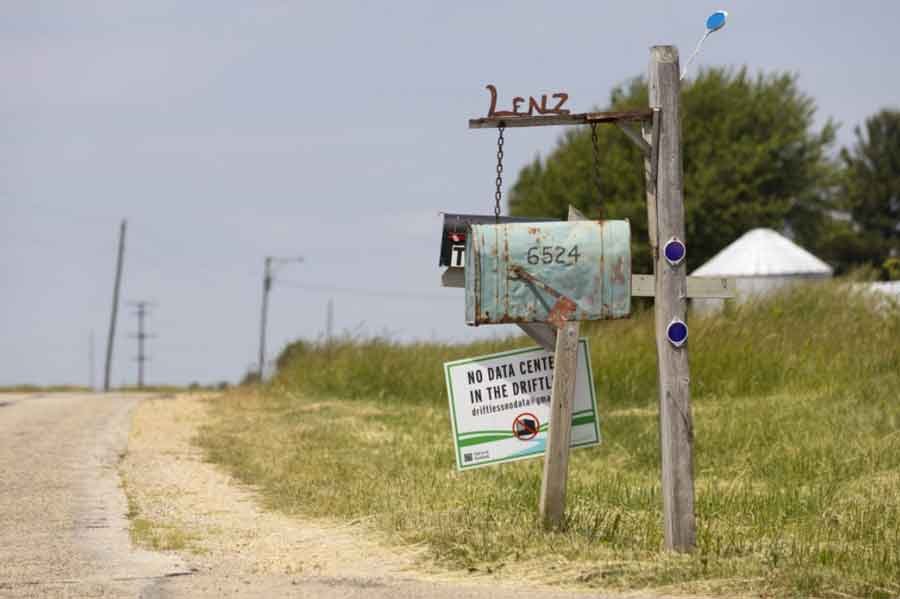
Monroe is in a good position when it comes to regulating data centers, the warehouse-like computer facilities that are popping up across the rural landscape to power artificial intelligence and other emerging digital demands. But the city should act now to control the future of its available land.
That’s according to Shannon Haydin, a consultant with South Dakota-based Vandewalle & Associates, the firm chosen to provide a report recently to the city’s Plan Commission on the lighting-rod issue.
During the meeting last Thursday, July 8, she detailed for officials how data centers work, where they might pop up in the city and area, and any options localities have in regulating them.
The city discussion comes just as the county’s zoning committee is scheduled to meet June 13, and discuss implementing a one-year moratorium on data centers.
“The good news, right now, is that nothing is facing you today, nothing is banging on the door,” she said. “It gives you time.”
By video-link, Haydin described for the commission the different types of data centers, with each having its own resource requirements, costs and related impacts on communities:
● Enterprise data center — operated by a single company for its own IT use
● Colocation data centers — multiple companies sharing or renting “rack space” on computer servers
● Hyperscale data centers — massive, highly scalable facilities that can span millions of square feet and house thousands of servers
● Edge data centers — smaller data centers located much closer to end-user and the devices they support
Some of the biggest data centers can use the same amount of electricity it would take to power 75,000 houses on a given day. Next to energy demand, water usage is perhaps the biggest issue when it comes to the impact of data centers on a city like Monroe, she said.
“Water use is a big deal,” she said, adding that while Wisconsin has plenty of fresh water, the infrastructure to access it isn’t always in place; and can be costly to build out.
Haydin said there does appear to be sufficient land available near the 69 KV or higher transmission lines required by today’s data center operation; and that such an operation could, in theory, be regulated by issuance of a conditional use permit. That could allow for language to dictate or limit the overall size and other aspects of any proposed data center project.
“Whatever you do next will help you have a good community conversation about what you can do,” in the future if a proposal is made, she said.
The Vandewalle report said policy options available include regulating or banning them outright through the zoning code; or taking the county’s approach of a enacting a moratorium on any data center proposals.
A moratorium would be useful as a temporary measure, but she said that’s not a long-term replacement for zoning and comprehensive land-use planning.
“During a moratorium you need to be actively doing something,” she said, noting that even though the city has a comprehensive land-use plan, an effort should be made to update it with an eye on emerging, and tech-driven development trends.
Commission member Ron Spielman also cautioned against leaning too heavily on a moratorium to solve to the problem in the short term.
“If you are going to be using the word moratorium you can’t just say ‘here’s a moratorium and now, we’ve done that’, we have a statutory obligation…” said Spielman. “I don’t think we’re here just to recommend a moratorium, what I’m hearing is that we’ve got a lot more responsibilities than that.”
The county meeting on data centers is scheduled for 3 p.m. July 13, in the second-story county board room at the downtown courthouse.