MONTICELLO — The Combine Cleaning Clinic was held Aug. 30 at Tim and Bryon Feller’s farm.
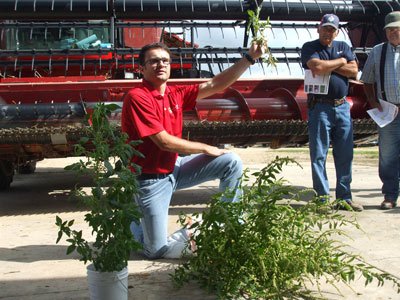
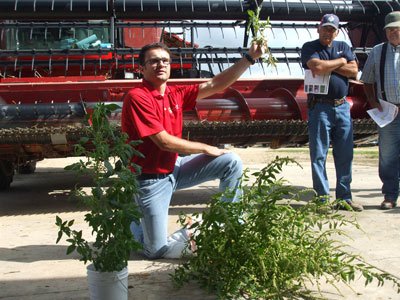
Dr. Rodrigo Werle, UW Extension Weed Scientist, told farmers in attendance about the differences in the biology of giant ragweed, waterhemp and palmer. Giant ragweed produces around 2,000 seeds for the average plant and the seed is viable in the soil for about two years. In contrast, the average waterhemp produces 25,000 seeds per plant and about 3 percent of the seed is still viable after being buried for 17 years. Most farmers are very familiar with giant ragweed. More are learning about waterhemp.
Werle said that there are 25 counties in Wisconsin that have herbicide resistant waterhemp confirmed. Palmer is the newer pigweed that is creeping into the state. There are eight counties that have confirmed populations of it.
Werle gave farmers ideas for best management practices for weed control in row crops. They included understanding the enemy (weeds), using good agronomic practices to create healthy and competitive crops, use effective pre and post emergence herbicide programs, and rotating crops, herbicide programs and traits in crops. The question was raised about rented land and how it’s treated. He said that the money should be spent to control these weeds and that farmers should be thinking more as a community to reduce the impact of these weeds. Werle invited farmers to submit waterhemp for extensive herbicide resistant testing. Details for sending in samples are on the website WiscWeeds.info.
The combine cleaning portion of the clinic was handled by Dan Smith, the Southwest Regional Specialist from the Nutrient and Pest Management Program. He showed the protective equipment, goggles, hearing protection and a dust mask, which farmers should wear when cleaning their combine.
He explained and showed research as to where the bulk of material hides in a combine. Most of it comes from the rock trap, the underneath portion of the combine after the head. A combine can hold up to 200 pounds of grain and other material after it’s allowed to run clean. There are lots of places for small seeds, like waterhemp and palmer to hitch a ride to another field. Most cleaning can be done with a leaf blower or compressed air. Smith has a video online for those that would like to know more about the cleaning process. It can be accessed at https://www.youtube.com/watch?v=nDMq1UanSkE
Those who missed the field day but are interested in receiving a copy of the handouts, contact Tonya Gratz at the Green County Land and Water Conservation Department, 608-325-4195 extension 121 or email Tonya.Gratz@wi.nacdnet.net.