MONROE — Green County Public Health, in coordination with the Wisconsin Department of Health Services (DHS), has confirmed a detection of measles virus in untreated wastewater from the City of Monroe in Green County collected on September 16.
Wisconsin currently has ongoing measles activity in several other counties throughout the state, with cases identified in Grant, Iowa, Lafayette, and Vernon counties. As of September 25, there have been 192 measles cases reported in Wisconsin in 2026. To date, no cases have been identified in Green County.
When measles is detected in wastewater from a community, it means that one or more people infected with measles were present in the community around the time the sample was collected. Wastewater can represent both the city and the surrounding areas, as well as people who may travel in and out of the area for activities such as work, school, or health care. Someone who does not live in a community could therefore be represented in wastewater while they are there. Green County is working closely with DHS to further investigate the wastewater detection and possible sources.
Wastewater monitoring is an important public health tool that has been used in Wisconsin since 2020 to track diseases like COVID-19, and more recently the flu, RSV and mpox. Untreated (influent) sewage from sewage treatment facilities across the state is tested on a regular basis to measure the presence of a given virus in the community.
“With measles outbreaks occurring in neighboring communities, testing wastewater for measles is one way we can monitor for disease spread,” said RoAnn Warden, Public Health Officer. “However, wastewater testing alone does not tell us who is sick. This is why it is important for people to ensure that they and their family are vaccinated against measles, are aware of the symptoms of measles, and can talk to their doctor if they are concerned about measles.”
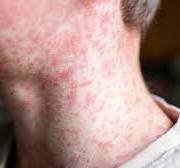
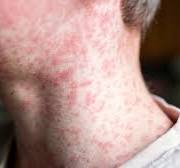
Measles is a viral illness that typically begins with a high fever, cough, runny nose, and red, watery eyes. Within a few days, a rash will appear, beginning as flat red spots on the face, usually at the hairline, and spread downward to the neck, trunk, arms, legs, and feet.
Measles is spread from person to person, often through the air on droplets of saliva. This may look like a sick person coughing or sneezing. The measles virus can stay in the air for up to two hours after a sick person has been in a room and may cause infection in up to 90% of unvaccinated people who are exposed to the virus. Individuals who have the measles can spread the virus to others four days before through four days after the rash appears. If you suspect that you have symptoms of measles, such as a fever, cough, or rash, especially after contact with someone who has measles, please contact a health care provider.
Measles can be prevented with the measles, mumps, and rubella vaccine (MMR). Two doses of the vaccine are about 97% effective at preventing the disease. In general, people born before 1957 are considered immune and do not need a vaccine. All other adults without laboratory evidence of immunity should have at least one dose of measles-containing vaccine, and children should have two doses. For more information on who should get a measles vaccine, visit the DHS measles webpage.
If you do not know if you or your children have been vaccinated to protect against measles, check the Wisconsin Immunization Registry or contact your doctor or local health department.
Anyone who may not be vaccinated to protect against measles can still get vaccinated. Your regular health care provider, local clinic or pharmacy, or local health department can help you determine what vaccines you need to protect your health. For free, confidential assistance finding a doctor or clinic near you, dial 211. If you are pregnant, have children under the age of 12 months, or are otherwise not able to receive the MMR vaccine, contact your doctor or community clinic for guidance. See the DHS measles webpage for more information on measles vaccines.