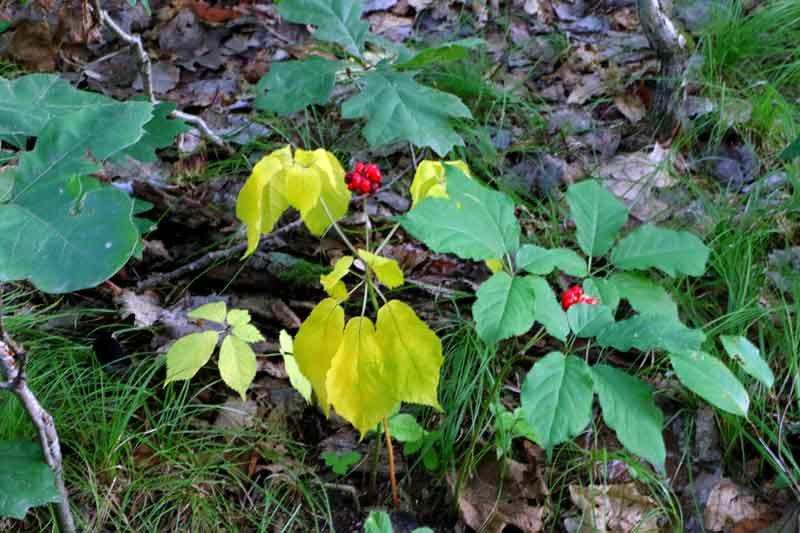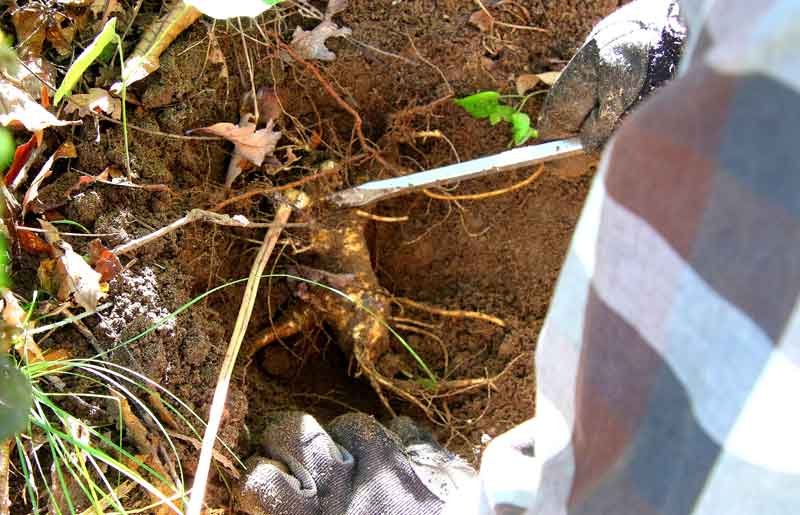
Wild ginseng, Wisconsin’s state herb needs conservation.
Wisconsin’s wild ginseng is protected by the September 1 through November 1 harvesting season and the Guide to Wisconsin Wild Ginseng Regulations.
This information and pamphlet, as well as state and federal statutes and laws, are primarily used by harvesters and dealers. But landowners and others who have the plant growing on their land, observers, and those who appreciate Wisconsin’s state herb should be aware of these regulations, too.
Landowners, whether they dig ginseng root or not, may want to take another step to preserve the ginseng populations on their land. Some farmers have used trail cameras to record trespassers. Others have, during the season, removed and planted the seeds, usually two tucked inside a red, fleshy fruit. Large plants are sometimes cut to the ground so the roots’ locations are impossible to find until a new stem appears in April.
This sensitive, beautiful perennial is perceptive to other pressures including disease, pests, development, and weather. Ginseng is interesting at all times when its annual shoot system is alive and above ground. Only the root is perennial, so harvesting that organ destroys that plant.
Harvest amounts and license sales have continued to decline, in part due to difficulty in getting permission to harvest on private land and root values diminishing. In 2016 Wisconsin sold about 1,000 diggers licenses. Last year, 2025, about 400 licenses were sold to residents, 398, and non-residents, 22, diggers.
Because the root has value, sometimes approaching $150 a pound for fresh root, Wisconsin Department of Natural Resources field wardens are likely to press citations while misuse of other resources may receive more of an educational warning.
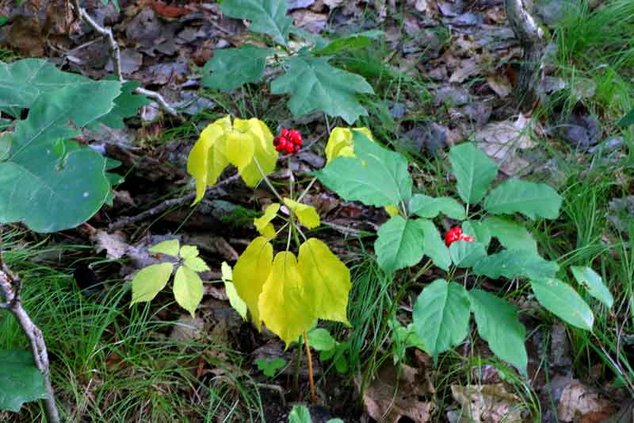
Still, some of those “caught” violating digging regulations consider the citation to be the price of doing business. A few continue to violate but the majority know and follow the laws. Mature plants with fiery red berries and golden leaflets can be first signs of autumn.
Ethics, education, and common sense by diggers and observers are plant populations best protection.
Other licensed outdoors activities beginning early September are early Canada goose season, early teal duck season, which closes September 9, and the lake sturgeon hook and line fishing season, September 5, closing September 30.
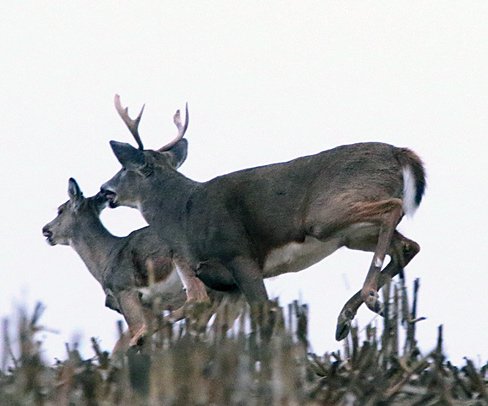
A raft of noticeable autumn signs includes white-tailed deer fawns losing their white spots, deer changing coat colors, bucks shedding their antler velvet, rubbing these hard antlers on sapling trees and creating ground scrapes under overhanging tree branches.
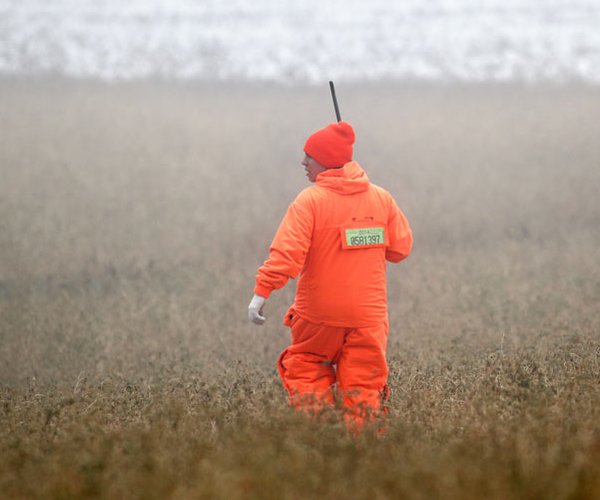
The archery and crossbow deer hunting seasons open September 12, along with small game and turkey hunting.
The sometimes dry and warm end to summer could have an impact on autumn color displays, bringing them a touch earlier and somewhat muted.
As always think small fall first with just a red fruit here and there, new blues, yellows and whites in blooming colors, final stages of hard mast and fleshy fruits, many if which appear to have weathered summer very well.
Shagbark hickory nuts are numerous and large locally.
Recognize crop fields as fall color changes, too in corn, soybeans, tobacco, and small grains maturing.
Conifer trees are doing autumn things including blue berry-like cones on “female” red cedars, browning seed cones on white cedar trees while the trees retain bright green scale leaves. White pine trees are exhibiting large, brown seed cones that open, drop seeds, and then drop from the trees.
A sometimes-forgotten fall colors show are woodland and field mushrooms of all colors and shapes including white coral fungi, puffballs, hunter-orange chicken of the woods and a few deadly, white Amanitas.
While some fall mushrooms are edible and tasty, stick with those you know to be safe and admire the rest but wonder how a squirrel can survive some of the ones that might make us sick or worse.
The best of all seasons is upon us. Enjoy its events while working, harvesting, hunting, documenting, and fishing.
— Jerry Davis is a freelance writer who lives in Barneveld. He can be reached at sivadjam@mhtc.net or at 608-924-1112.