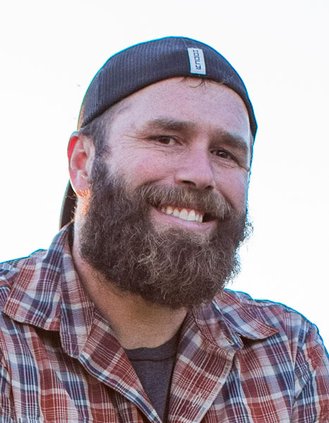
Of all the jobs that must occur at Wegmueller Farm, the controlled spring burn is by far my favorite. Every April when the weather is just right and the wind is favorable, I get to burn a section of grassland that my dad established as a wildlife set-aside. It is my favorite thing to do, and a true indicator that spring has arrived.
My dad came home from college in the mid 1970s. As fate would have it, a neighboring farm came up for sale. As a young farmer just starting out and looking to establish a family of his own, my dad purchased the farmstead with its attached 90 acres of cropland.
At the time, the farmstead was severely dilapidated. The house had been sitting abandoned for several years. The barn and outbuildings were relics from another era — established at a time when Wisconsin was considered to be the next wheat growing region. And the land, well — the land was depleted and eroded. The hillsides were rutted and shallow, and cattle had been turned loose to graze along the creek. Simply put, the farm was run down and suffering from years of mismanagement and neglect.
My dad was many things to many people, but first and foremost he was a conservationist. He worked to fence the cattle away from the creek, and applied a variety of conservation practices to the cropland, including contour strips, waterways, and diversions. The creek was shored up with riprap, and a protective buffer of native perennials established along the banks. One of my dreaded childhood jobs was to collect walnuts and dump them by the bucketful along the creek. As a kid I understood the value in planting trees, but would have rather been doing something else.
Each spring my dad would head out to do a controlled burn on the grasslands. This was always something he did on his own. After he passed away in 2014, the task of burning the grassland fell onto my shoulders.
I now understand the value in doing this task in solitude. There is a sense of rebirth with each burn, much like ecdysis facilitates growth. Most therapeutic of all, is to observe how the smallest flame ignites a single dry clump of grass. Then to watch as the flame quickly spreads, and is carried by the breeze. Very soon, the smallest spark has ignited a firewall. Propelled by the wind, the flames leap and dance, exhibiting a life of their own as they consume everything dead in their path.
I find the fire to be soothing as it consumes dried leaves and crisp, lifeless organic matter, leaving behind a path of jet-black ash. The smell of an all-natural fire is therapeutic — there really is nothing quite like the aroma of a wood fire. A controlled and well-managed burn is essential to the biodiversity of the natural world, and helps to promote the growth of native plants while helping to eliminate invasive species. Burning opens the soil to sunlight, warming the earth and inviting new growth. I love to be an integral part of this process, and the connection with nature truly makes me feel at peace.
While conducting the burn, I allow myself the joy in getting lost in the wilderness. I explore the creek banks. This year, we have a family of beavers working on a dam. Several smaller and mid-sized trees have been gnawed off, and I can see where the beavers are building their lodge. I’ve found antler sheds, animal bones, a cub scout canteen from the 1950s, and relics from childhood forts. There are many 30 to 40 year-old walnut trees along the grassland and I smile at the sight of them, relishing my dad’s foresight to plant trees decades prior.
Grandest of all are a few oak trees, the eldest of which has been professionally estimated to be around 300 years old. Imagine what it means to be a silent witness for three centuries, and counting. Interestingly, it was in the company of these elders, shortly after my dad passed away and I was struggling to conceptualize what the future of the farm might hold, when the realization washed over me:
The future of the Farm was not to produce more, simply for the sake of producing more. We would not fall into the trap of commoditization, a process that has claimed the individuality of the land, our animals, and the nation’s traditional stewards. Rather, the future of the Farm would be to share it, and let others experience the sacrality of maintaining a connection with the natural world.
We live in an outrage-obsessed society that feeds off discord. Literally, the systems in place are designed to thrive from our hysteria. I would rather not be a part of this. I think the analogy of relishing the sight of yesteryear’s old, dried out, out of touch material go up in flames in order to facilitate new growth is entirely appropriate.
The best part of being outside, in nature, is there is no incentive to be outraged.
I highly recommend it.
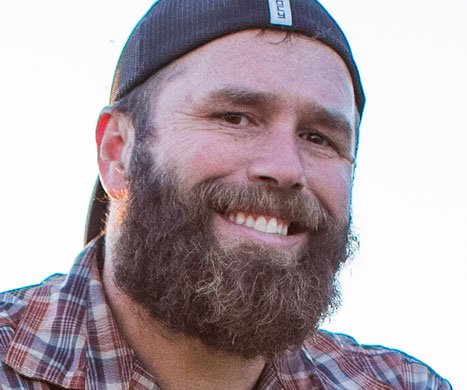
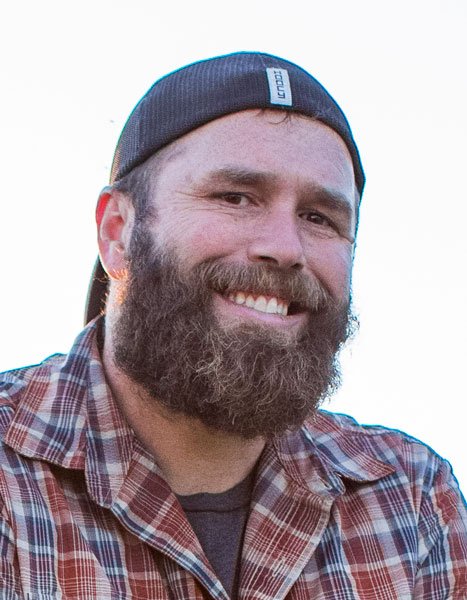
— Dan Wegmueller is the owner of Wegmueller Farms and his column appears regularly in the Times. His website is https://www.farmforthought.org.