A mile of road will take you one mile. But, a mile of runway can take you anywhere.
I taxied the 1940 Fairchild PT-19 to the edge of the runway at Cape Girardeau Regional Airport. Ahead of me was nearly 4,000 feet of uninterrupted pavement. So, not quite a mile. I would only need 500 feet or so to take off.
The clock ticked 6:50 am. It was daylight, although the sun was obscured behind a solid overcast sky. A very steady 15 mile-per-hour wind blew directly down the runway, gusting as much as 25 miles per hour. The wind was oriented out of the southwest, directly along our flight path. Meaning, I would be fighting a headwind all the way to the Gulf of Mexico.
At the runway threshold, I performed one final engine test. I pulled warm engine air through the carburetor, tested both ignition systems, and ran the control surfaces through one last test. All good; no reason to abort the trip.
From Cape Girardeau, Missouri, we would fly southwest through the entirety of Arkansas, split northwest Louisiana before crossing into eastern Texas over a stringy body of water marked as the Toledo Bend Reservoir. Still heading southwest on a compass heading of 210 degrees, we would fly to Galveston, Texas. This was the portion of the trip that I was most looking forward to — Galveston to Corpus Christi, along the Gulf of Mexico. The left wing would stretch out over the water, while the right wing over land. On one side, endless blue, on the other, green. We’d be able to smell the ocean, and look down at the beach.
As I sat at the end of the Cape Girardeau runway for those brief moments before takeoff, I looked down the pavement to the horizon. Way off in the distance was Galveston. Aside from a fuel stop or two, it was a straight shot all the way.
I took my first airplane ride when I was four days old — at least, that’s what I was told. When my dad passed away I checked his flight logbook and sure enough, four days after I was born was a simple entry, “Flew to [Milwaukee]. Danny rode on Becky’s lap and did well”, which is more of a testament to my mother than it is to me. I grew up around grassroots aviation, and have never tired of the sheer privilege of being able to fly. I love the freedom, I love the view, and I love the camaraderie. We even get to speak our own language. Take this exchange with Cape Tower as an example:
Me: “Good morning Cape Tower! Fairchild one-niner-golf-papa is at two-zero, looking for a departure to the southwest, climbing two thousand, five hundred feet.”
Cape Tower: “Fairchild one-niner-golf-papa, altimeter three-zero-one-five, clear for takeoff runway two-zero. Maintain departure heading at or below two thousand five hundred until clear of Delta.”
Me: “Cape Tower, one-niner-golf-papa clear for takeoff two-zero at or below two thousand five hundred, runway heading, thank you!”
Man, did it feel good to be moving! I rolled the PT-19 onto the runway. Nearly 4,000 feet of pavement stretched out before me, and way beyond the horizon — Galveston. The wind buffeted the aircraft. I checked the time at 6:55 a.m. The PT-19 rolled forward. I moved the throttle lever slowly but deliberately full open, and the 6-cylinder, 200 horsepower Ranger engine roared. The translucent propeller disc disappeared altogether as the prop spun faster and faster. The aircraft pulled suddenly to the left due to the rotation of the propeller, but I expected it and compensated with slight right rudder input.
Almost immediately, we picked up speed. I pushed forward on the stick, bringing the tailwheel off the ground so the airplane stood up on its mains, like a ballerina en pointe. The wings began to rock as we generated speed, but not quite enough to produce lift. Slight rudder input, either left or right, kept us moving down the centerline of the runway.
There it was — that slight but intuitive pull at that crucial airspeed. I pulled back on the stick with steady, even pressure — we were off! The feeling never ceases to amaze me, and I revel now, as I always do, at the sensation of flight. As a child, I would look out the airplane window and watch the tires spin as the earth dropped away. They would continue to spin, even as we climbed above the trees.
I could not see the tires from the pilot seat in the PT-19, but I imagined them spinning. As we climbed, I imagined the vision that I so enjoyed as a child. I wondered when and where would those tires spin again? Would we make our first designated fuel stop? Would the wind or mechanical issues force us to land somewhere else?
A mile of highway will take you one mile, but a mile of runway will take you anywhere.
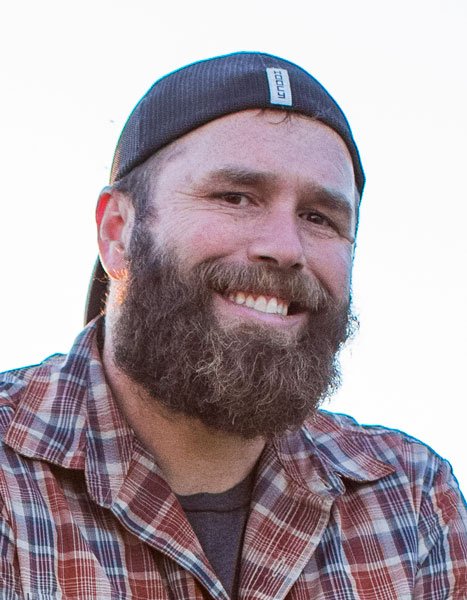
— Dan Wegmueller is the owner of Wegmueller Farms and his column appears regularly in the Times. His website is
https://www.farmforthought.org.