A quiet and unsettled peace fell over the farm in Chaz’s absence.
I noticed the shift during one of my late-night walks. On most nights, I enjoy the solitude of walking alone to clear my head. The darkness exposes fewer distractions and fewer obligations. It is a privilege to get lost in the night sky and to be alone in my thoughts. I have found the evening solitude to be a welcome respite from the constant barrage of daytime commitments.
Aside from the obvious benefits of self-therapy, it is a powerful thing to be comfortable alone in one’s own presence.
On these nighttime walks, I always check on the horses. I quietly and deliberately walk through the horse pasture. I like them to know I am out and about, but I never draw attention to myself. They seem comforted by my constant presence and that I am always there, keeping an eye on them. For me, it is interesting to see which horses approach me on any given night, and which ones watch quietly from the shadows from afar.
It is usually Chaz who presents himself first. I hear him approach with his low grumble, followed by an imposing figure materializing out of the shadows. He walks with purposeful dignity and I always remark, “Buddy, when I see you walking towards me, I know I am in the right place.”
As I presented myself to the herd on this evening, there was no movement. The horses all stayed put. I could see their outlines in the starlight. Standing quietly, heads dipped, no movement. The atmosphere was sad. I thought of it from their perspective. All of a sudden, their patriarch was whisked away. No explanation; just gone. Several minutes ticked by. No movement. I took a few steps, moving in such a way to be nonthreatening. Ears followed my movements. Chaz was in Madison at UW Veterinary Care recuperating from a life-threatening injury, but how could they know that?
And then, movement from the shadows. It was Trixie. I recognized her profile and the way she walked. I welcomed her approach. Trixie is an aged Palomino mare that was donated to Wegmueller Farm’s horseback riding program. She is, without question, the least dramatic horse I have ever met. She delivers safe and reliable riding lessons and trail rides without any drama whatsoever. Her eyes are soft, warm, and bright in the same way you might remember a good mother or grandmother. From day one she has understood the assignment, and is a foundational contributing member to our program.
Of significance, Trixie has taken quite a liking to Chaz. Up until his accident, Trixie and Chaz were constant companions, standing side by side in pasture, and always walking in one another’s company on trail rides.
On this night, Trixie approached with her head down, and gently nuzzled my hand. I stood motionless, feeling her warm breath and gentle outreach, as horses do when you pose no threat. We stood in each other’s company, and I found it meaningful to say out loud, “It’s OK girl, Chaz is coming home tomorrow. I miss him too.”
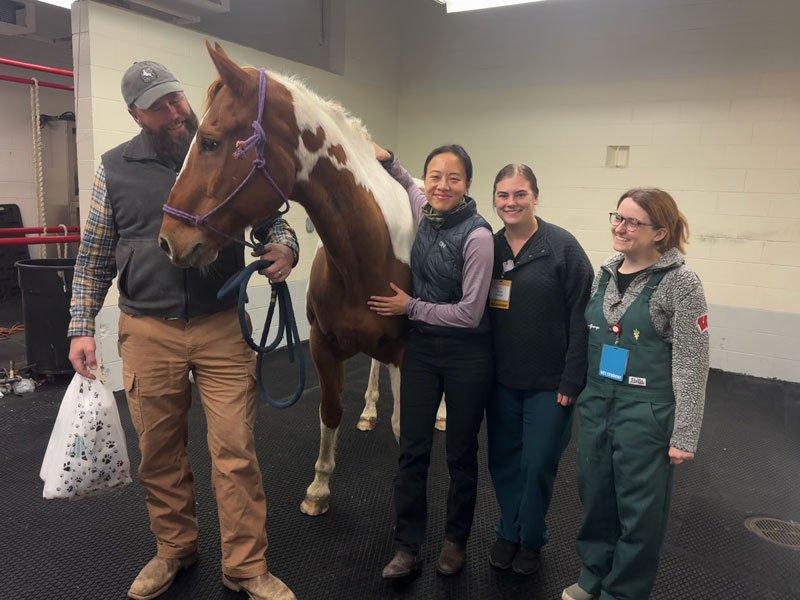
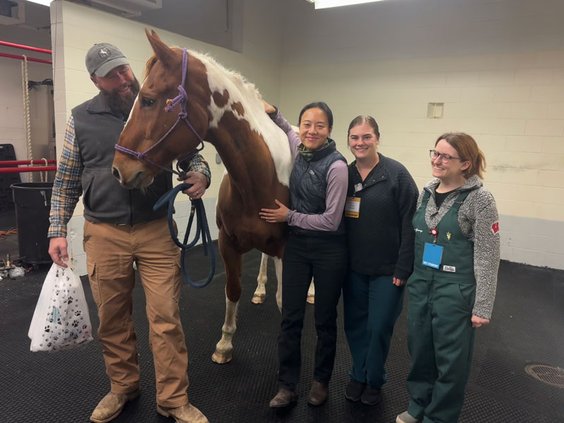
True to my word, Chaz’s recovery, and the incredible care at UW Veterinary Care, Chaz returned home the next day. The entire staff at UW gathered to see him off, pose for a picture, and one of the technicians braided his mane. By all accounts, the trip to Madison saved his life.
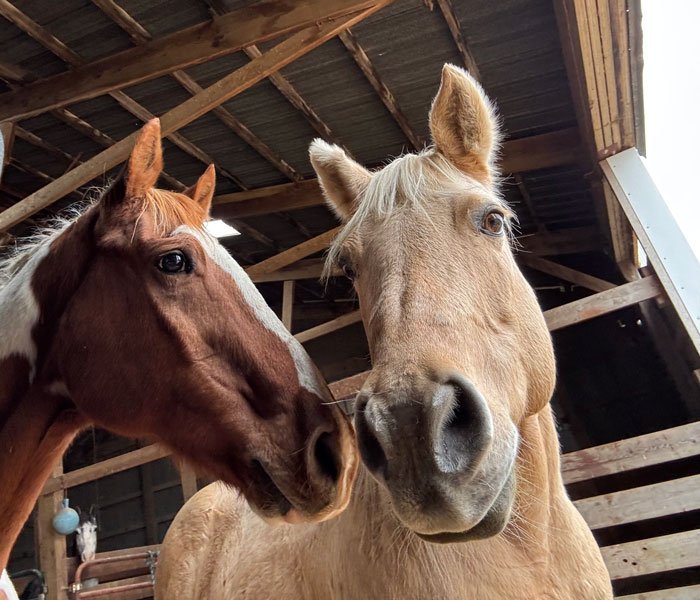
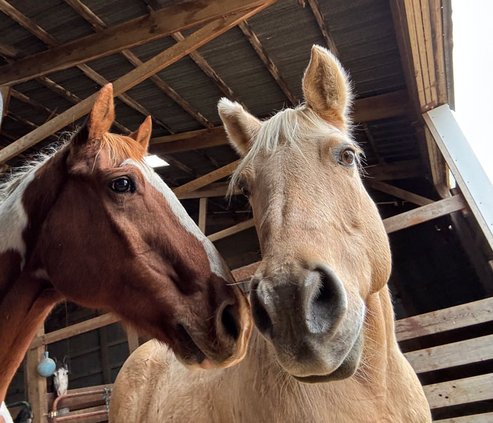
Chaz stepped off the trailer on an unseasonably warm day in late October beneath a bluebird sky. It was, in every sense, a return of the king. The horses out to pasture galloped to the front and called out to their friend. I walked him down to the fence. As horses do, they snorted and stomped their hooves at one another. Trixie stayed back and watched her friend from afar. I could see a brightness reflecting in her eyes as she watched from a distance, away from the drama.
Chaz will be on stall rest through winter and until spring, and he will need his bandage changed every few days. The wound will heal, it’s just going to take time and care. At the last change, the wound is healing incredibly well, with no complications. Healthy tissue has formed over the bone, and the skin is closing up with no signs of infection.
On days when the indoor riding arena is not being used, I let Chaz roam freely. He enjoys the extra space out of his stall, and he especially likes to antagonize the Shetland ponies and donkeys. They stomp and squeal at one another in a comical display of aggression - like chihuahuas challenging an English Mastiff. Some days, I bring Trixie to the indoor arena to let her spend time with “her” Chaz. Of all the horses, there is never drama between those two; they nuzzle one another and share bits of hay.
How we, as a society, treat our animals is a precursor to how we will ultimately treat one another. There is a sacredness to individuality, slowing down, and making a point to be more mindful and more present in each moment.
I learned that from my best friend, the horse.
— Dan Wegmueller is the owner of Wegmueller Farms and his column appears regularly in the Times. His website is https://www.farmforthought.org.