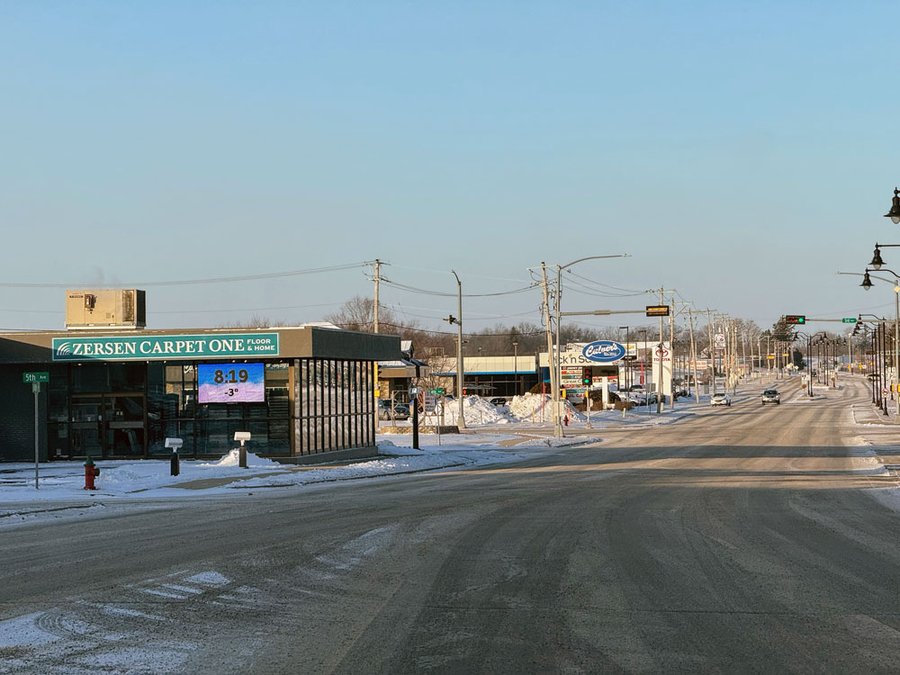
MONROE — Dangerously cold weather is expected across the Midwest and Great Lakes region heading into the weekend.
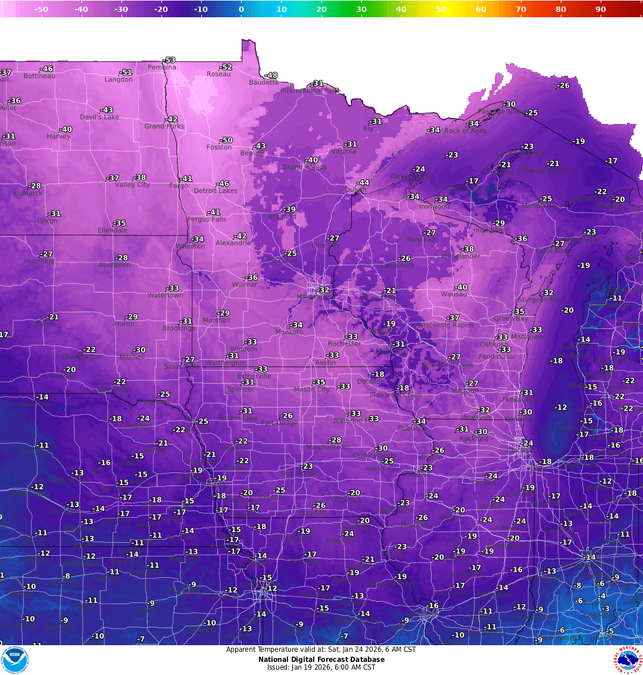
Temperatures took a deep dive to begin the week, with wind chills on Monday morning, Jan. 19, reaching in the -20s across many locations in the stateline region. After a marginal warmup on Tuesday and Wednesday, temps are forecasted to plummet again on Thursday, with Friday and Saturday wind chills reaching dangerously low temperatures, according to the National Weather Service.
At 6 a.m. on Thursday, Jan. 22 wind chills are expected to reach sub-zero temperatures, only to warm up to about 0 degree by noon. On Friday, high temperatures with wind chills in Green and Lafayette counties will be around -20 — and possibly colder — as the newest polar vortex grips North America.
By Saturday morning, temps will drop to under 30 degrees below zero and rising into the negative teens range.
Extremely cold air comes every winter into at least part of the country and affects millions of people across the U.S. The arctic air can be dangerous. Combined with brisk winds, dangerously cold wind chill values can result. People exposed to extreme cold are susceptible to frostbite and can succumb to hypothermia in a matter of minutes. Areas most prone to frostbite are uncovered skin and the extremities, such as hands and feet. Hypothermia occurs when the body loses heat faster than it can produce it.
Cold weather can also affect crops. In late spring or early fall, cold air outbreaks can damage or kill produce for farmers, as well as residential plants and flowers. A freeze occurs when the temperature drops below 32°F. Freezes and their effects are significant during the growing season. Frost develops on clear, calm nights and can occur when the air temperature is in the mid-30s. Each plant species has a different tolerance to cold temperatures. You may also want to check out our winter safety site for snow and more cold season hazards information.
Extreme Cold Warning vs Watch and Cold Weather Advisory
Extreme Cold Warning:
Take Action! An Extreme Cold Warning is issued when extremely dangerous cold conditions or wind chill values are expected or occurring. If you are in an area with an Extreme Cold Warning, avoid going outside. If you have to go outside, dress in layers, cover exposed skin, and make sure at least one other person knows your whereabouts. Update them when you arrive safely at your destination.
Extreme Cold Watch:
Be Prepared. An Extreme Cold Watch is issued when extremely dangerous cold conditions or wind chill values are possible, but the occurrence, location, and/or timing is still uncertain.. As with a Warning, adjust your plans to avoid being outside during the coldest parts of the day. Make sure your car has at least half a tank of gas, and update your winter survival kit.
Cold Weather Advisory:
Be Aware. A Cold Weather Advisory is issued for dangerously cold conditions that are not expected to reach warning criteria. Be sure you and your loved ones dress appropriately and cover exposed skin when venturing outdoors.
Freeze Watch vs Warning and Frost Advisory
Freeze Warning:
Take Action! A Freeze Warning is issued when temperatures are forecasted to go below 32°F for a long period of time. This temperature threshold kills some types of commercial crops and residential plants, while temperatures below 28°F for an extended period of time can kill most types of commercial crops and residential plants.
Freeze Watch:
Be Prepared. A Freeze Watch is issued when there is a potential for significant, widespread freezing temperatures within the next 24-36 hours. A Freeze Watch is issued in the autumn until the end of the growing season and in the spring at the start of the growing season.
Frost Advisory:
Be Aware. A Frost Advisory means areas of frost are expected or occurring, posing a threat to sensitive vegetation.
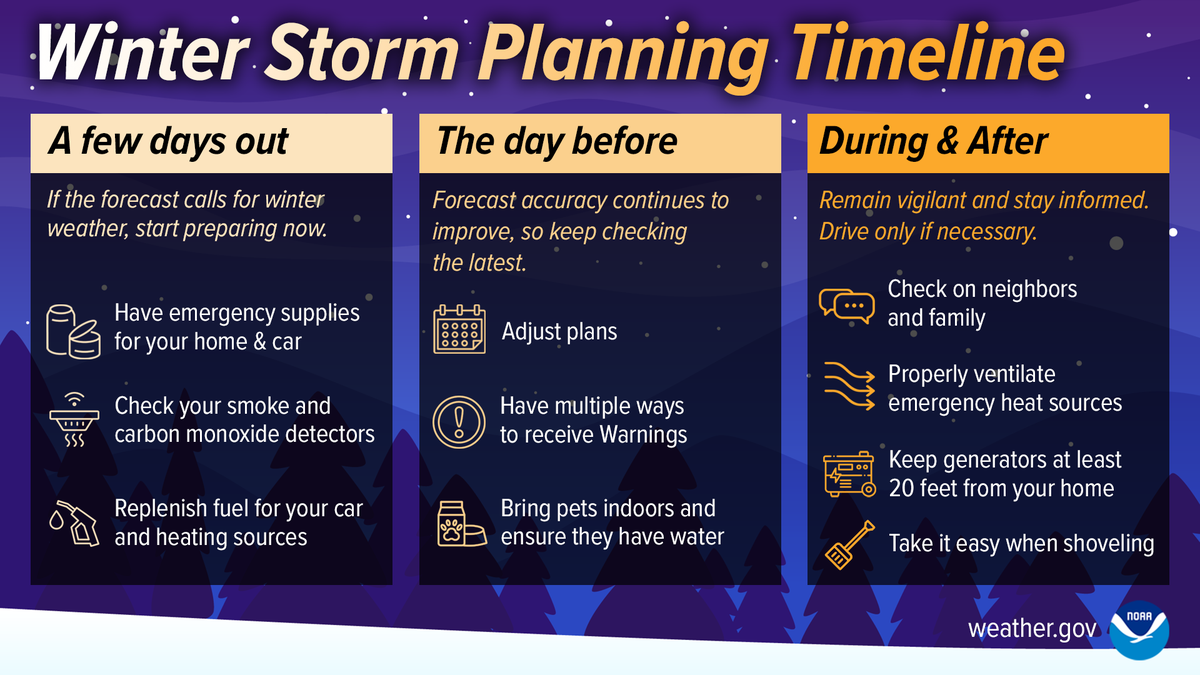
Prepare for Cold Weather
The way to avoid frostbite and hypothermia is to plan for extreme cold before it arrives. Don’t get caught unprepared.
● Check the Forecast at weather.gov or your favorite weather app, station, etc.: Make checking the forecast part of your regular routine so you’ll know when to expect cold weather.
● Adjust Your Schedule: If possible, avoid being outside during the coldest part of the day, typically the early morning. Try to find a warm spot for your children while waiting for the school bus outside.
● Protect Your Pets, Livestock and other Property: If you have pets or farm animals, make sure they are not overly exposed to extreme cold and have plenty of food and water that has not frozen. Take precautions to ensure your water pipes do not freeze. Know the temperature thresholds of your plants and crops.
● Fill up the tank: Make sure your car or vehicle has at least a half a tank of gas during extreme cold so that you can stay warm if you become stranded.
● Dress for the outdoors even if you don’t think you’ll be out much.
● Update Your Winter Car Survival Kit: Make sure your car survival kit has the following:
- Jumper cables: flares or reflective triangle are great extras
- Flashlights: Replace the batteries before the winter season starts and pack extras
- First Aid Kit: Carry essential medications with you in a purse or bag
- Baby gear: Diapers and any special formula or food
- Medical supplies: Materials for any special medical needs.
- Food: Non-perishable food such as canned food and a can opener, dry cereal and protein rich foods like nuts and energy bars
- Water: At least 1 gallon of water per person a day for at least 3 days
- Basic toolkit: Pliers, wrench, screwdriver
- Pet supplies: Food and water
- Radio: Battery or hand cranked
- Cat litter or sand: For better tire traction
- Shovel: To dig out snow
- Ice scraper: Have one in the car even if you usually park in a garage
- Clothes: Dress for the weather in warm clothes, gloves, hat, sturdy boots, jacket and an extra change cold weather of clothes
- Warmers: For body, hands and feet
- Blankets or sleeping bags: If you get stranded you’ll be glad to have it.
- Charged Cell Phone: And keep a spare charger in your car
If you or someone you care about must venture outdoors during extreme cold this winter, dress in layers. Cover exposed skin to reduce your risk of frostbite or hypothermia. Try to seek shelter from the wind as much as possible while outside. Once inside again, change into dry clothing immediately if you are wet. Watch for frostbite and hypothermia, and take immediate action upon the first detection of either.
Watch for Frostbite
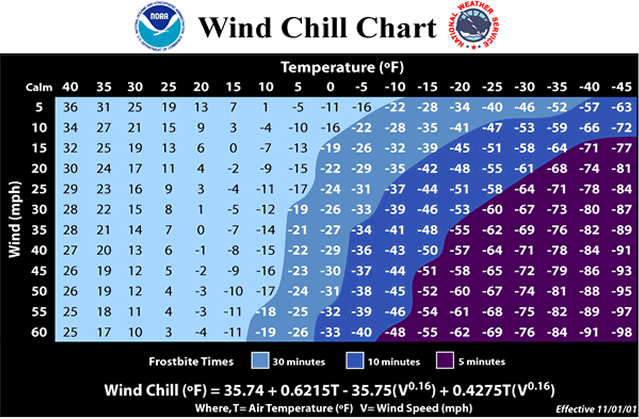
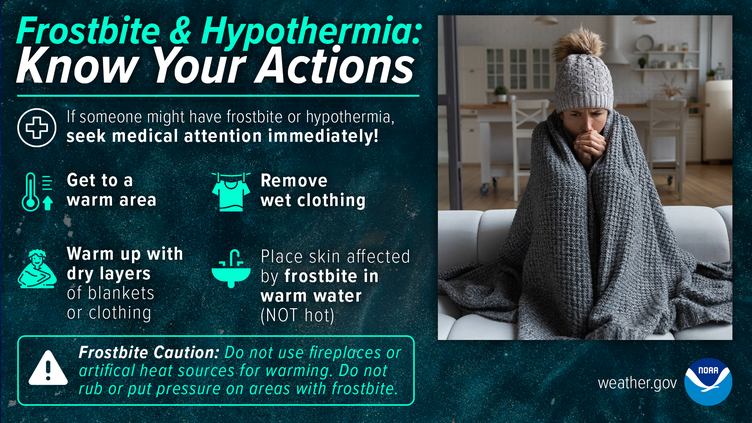
Frostbite can happen in minutes, especially on the extremities such as fingers, toes, nose and ears, but can affect any area of exposed skin. If you suspect frostbite, immediately move inside to a heated location and begin warming the affected areas using warm water or body heat. Do not use hot water or radiant heat such as a fireplace since affected areas can be easily burned. Seek medical attention for severe frostbite.
Frostbite happens when the body’s survival mechanisms kick in during extremely cold weather. To protect the vital inner organs, the body cuts circulation to your extremities: feet, hands, nose, etc., which eventually freeze. To avoid frostbite, stay inside during severe cold, especially when the windchill is -50°F or below. If you must go out, try to cover every part of your body: ears, nose, toes and fingers, etc. Mittens are better than gloves. Keep your skin dry. Stay out of the wind when possible. Drink plenty of fluids since hydration increases the blood’s volume, which helps prevent frostbite. Avoid caffeine, alcohol and cigarettes. Caffeine constricts blood vessels, preventing warming of your extremities. Alcohol reduces shivering, which helps keep you warm. Cigarettes restrict the blood flow to your hands. Below are indicators of frostbite:
From CDC: Signs & Symptoms of Frostbite
● Redness or pain in any skin area may be the first sign of frostbite.
● A white or grayish-yellow skin area
● Skin that feels unusually firm or waxy
● Numbness

Frostbite First Aid
Get indoors as quickly as possible. Until you can get indoors:
● Don’t rub or massage cold body parts.
● Put your hands in your armpits.
● Hold onto another person or animal.
● Drink warm liquids.
● Put on extra layers of clothes, blankets, etc.
● Remove rings, watches, and any other tight jewelry or related items.
Once indoors:
● Don’t walk on a frostbitten foot. You could cause more damage.
● Get in a warm, NOT hot, bath and wrap your face and ears in a moist, warm, NOT hot, towel.
● Don’t get near a hot stove or heater or use a heating pad, hot water bottle, or a hair dryer. You may burn yourself before feeling returns.
● Frostbitten skin will become red and swollen and feel like it’s on fire. You may develop blisters. Don’t break the blisters. It could cause scarring and infection.
● If your skin turns blue or gray, is very swollen, blistered or feels hard and numb even under the surface, go to a hospital as soon as possible.
Beware of Hypothermia
When your body temperature sinks below 95°F, you have hypothermia, a serious health hazard that occurs when body temperature is lowered too much. Get medical attention immediately. Move the victim inside to a heated location and begin warming the center of the body first. If the person is unconscious, administer CPR.
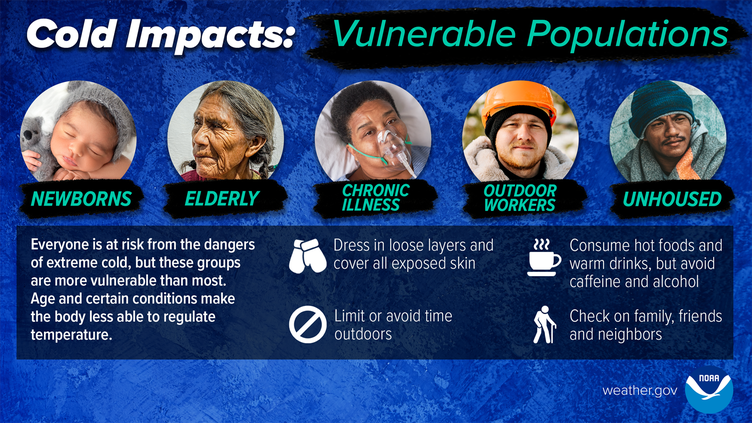
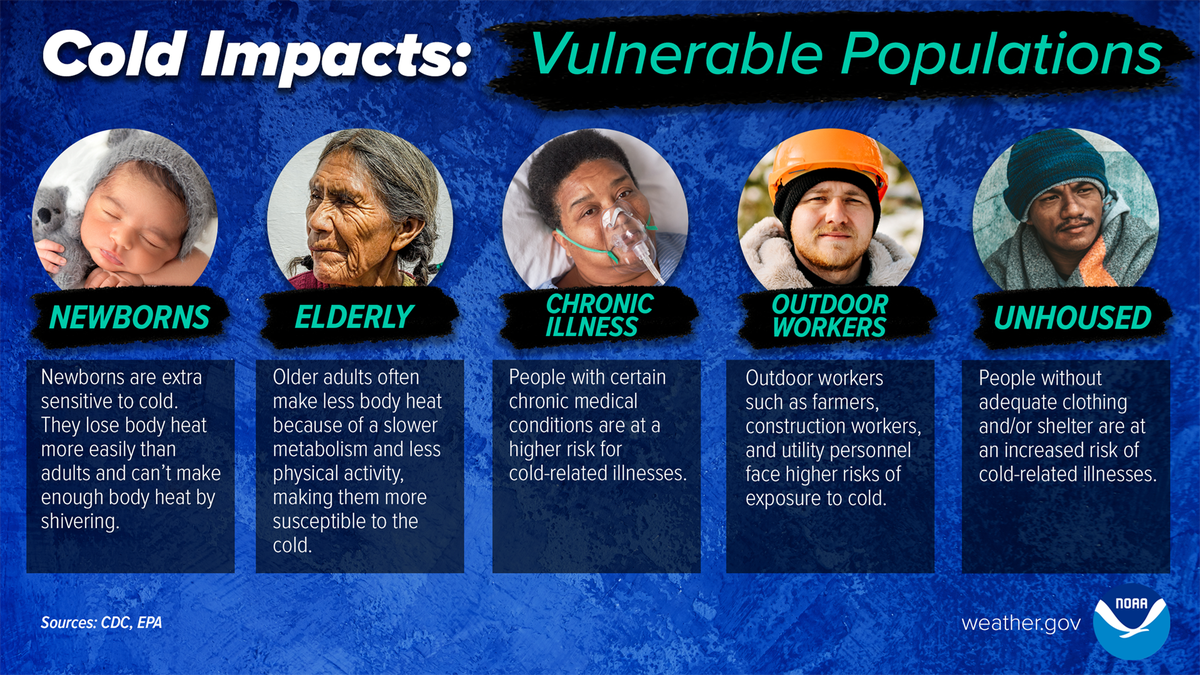
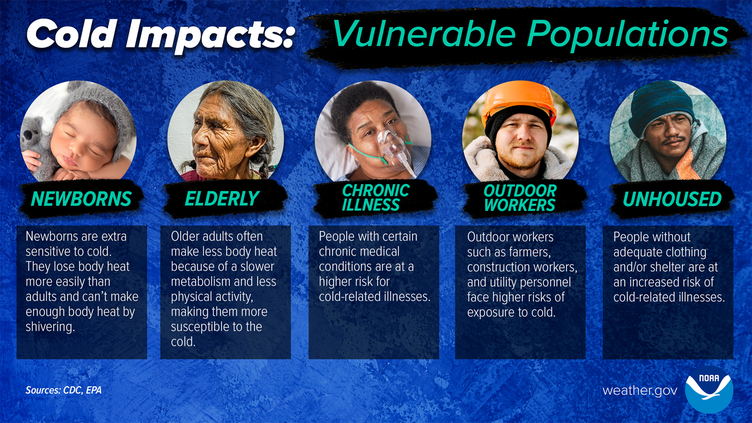
Hypothermia can occur in temperatures as warm as 60°F, particularly in water or if you are outside a long time and not dressed for the weather. Of the approximately 1,300 people the CDC lists as being killed by hypothermia each year, most are seniors, according to the National Institute of Aging, but some are children and young adults. Everyone needs to be careful. Some medicines, problems with circulation, and certain illnesses may reduce your ability to resist hypothermia. As you age, your body becomes less efficient at letting you know when you are too cold. In addition, older people tend not to shiver effectively, one of the ways the body warms itself up.

Remember these tips to help prevent hypothermia:
● Dress in layers.
● Wrap up well when going outside in the cold.
● Avoid breezes and drafts indoors.
● Eat nutritious food and wear warm clothes to ward off winter chill.
● Wear a warm hat in the winter.
● Eat hot foods and drink warm drinks several times during the day.
● If you live alone, ask a family member or neighbor to check on you daily or have a camera installed that a family member can view on their computer.
● Ask your doctor if any medicine you’re taking increases your risk of hypothermia. Drugs that may cause a problem include barbiturates, benzodiazepines, chlorpromazine, reserpine, and tricyclic antidepressants.
● If your temperature is 95°F or less, you feel cold and sluggish, or you are having trouble thinking clearly, see a doctor immediately or go to the nearest emergency room. It’s better to be overly cautious than to die of a disorder that doesn’t have to be deadly.
● If you are trying to help someone who may have hypothermia, first call an ambulance. Then lie close to the person and cover both of you with thick blankets. The hotter you get, the more warmth you can give the other person. Don’t rub the person or handle them roughly.

Staying Safe During Power Outages
● Wear layers of loose-fitting, lightweight, warm clothing as well as hats, mittens, and blankets.
● Close blinds or curtains to keep in some heat.
● Close off rooms to avoid wasting heat.
● Place towels or rags in cracks under doors.
● Practice portable generator safety: use outdoors, at least 20 feet away from doors/windows/garages to avoid carbon monoxide poisoning. Follow instructions on proper use.
Once your family is safe, check on your neighbors and the vulnerable to make sure they are okay.
Essential Tasks After it Warms Up
● Check Your Pipes: Your pipes may be frozen. Water pipes on exterior walls and in places that are subject to cold, like in the basement, attic, and under kitchen cabinets, freeze most often. Water expands as it freezes, causing pipes to burst. If they are frozen, first turn on the faucet. Water will drip as you warm the pipes. Heat the pipes using a space heater, heating pad, electric hair dryer, or hot water on a cloth. Never use an open flame. Continue until water pressure returns to normal or call a plumber if you have more issues.
● Salt Your Walkways: Once it warms up enough to go out, it’s important to shovel the snow from your sidewalks and driveway or sprinkle salt if there is ice. If there is a thick layer of snow on the ground that you cannot move, salt the area so that the snow melts. You should also put down salt if there is ice on the stairs leading into your house — less than a quarter inch of ice can be dangerous!
● Call Your Neighbors: Check to see that your neighbors are okay, particularly seniors, disabled persons, or others living alone. Carbon monoxide poisoning is one of the leading causes of death after extreme cold, particularly if there are power outages. Cases of frostbite and hypothermia are also common for elderly people who were stuck in their homes.
● Refill Your Supplies: This cold event may be over, but there might be another one soon. It is important to always be prepared.
— Adam Krebs contributed to this report