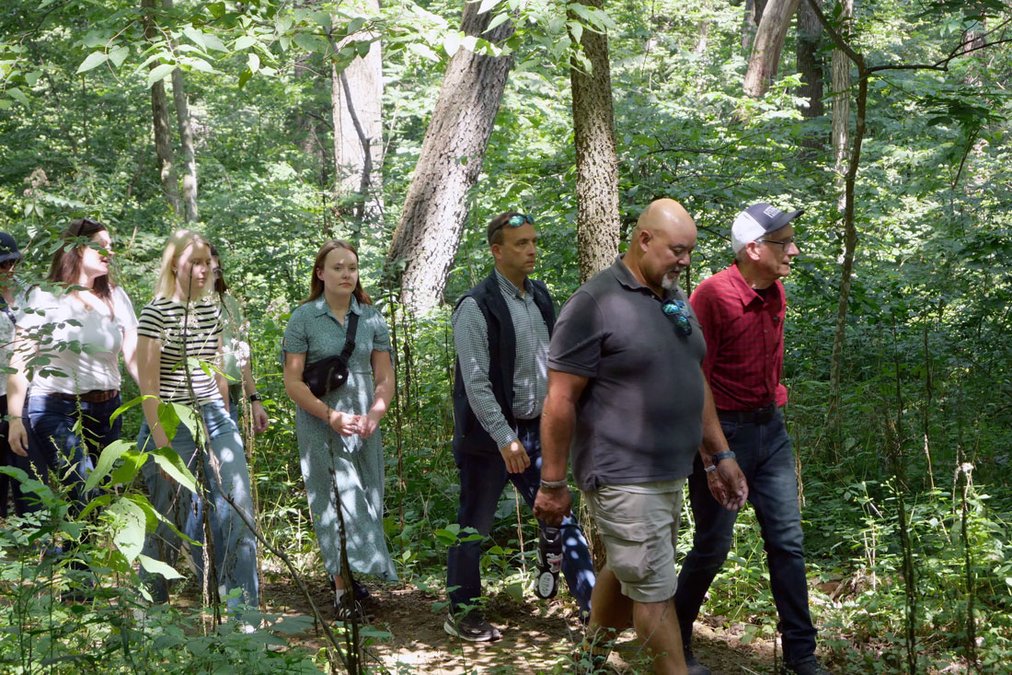
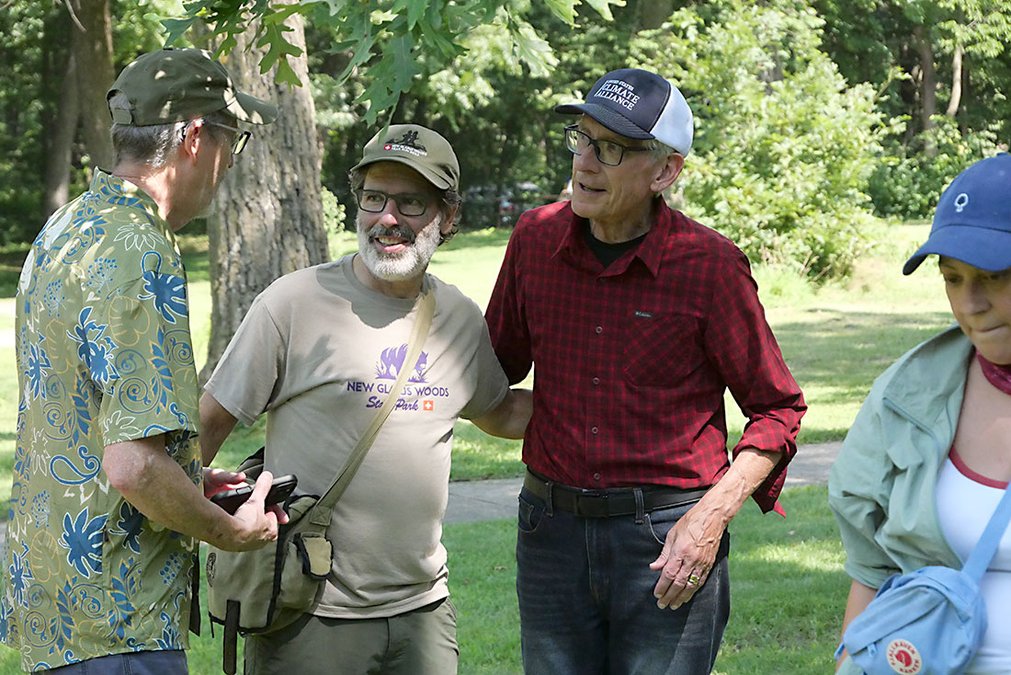
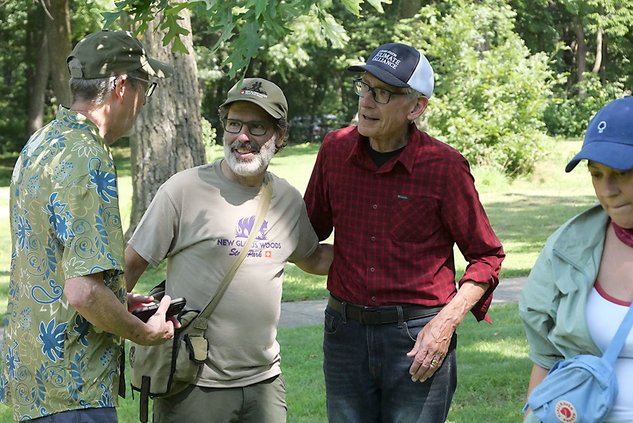
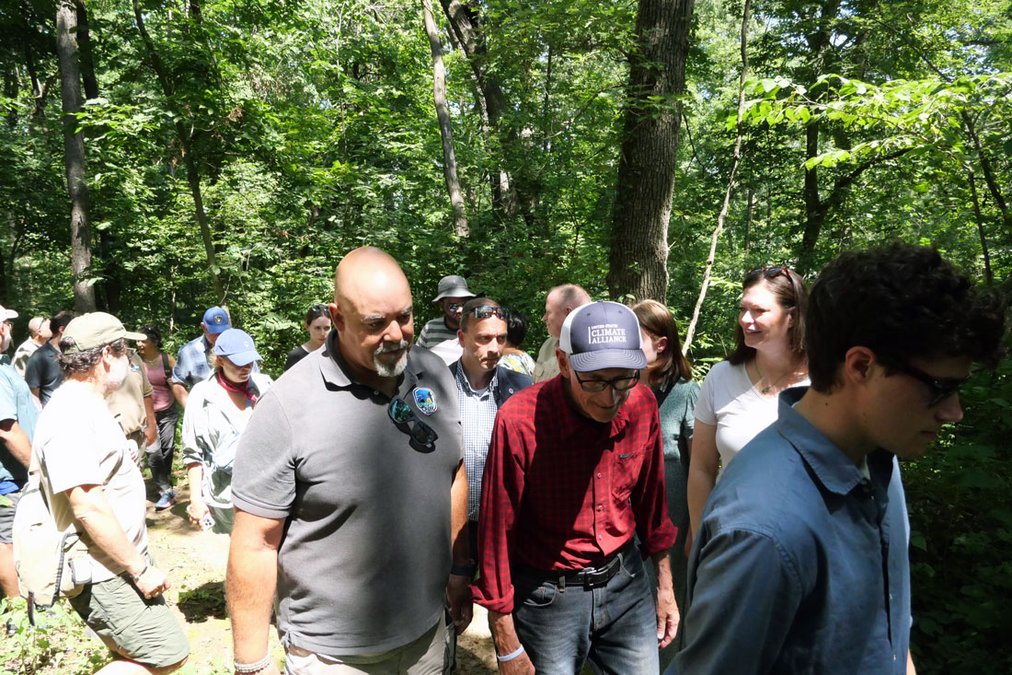
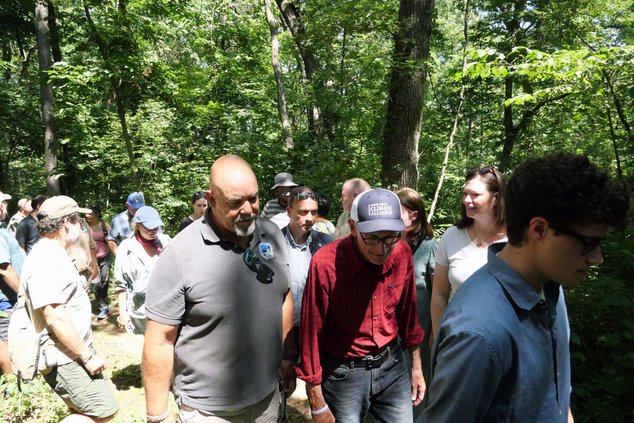
NEW GLARUS — Wisconsin is celebrating the 125th Anniversary of its state park system this year. On Aug. 15, Governor Tony Evers came to New Glarus Woods State Park to walk the trails alongside several conservation groups and supporters of the parks.
Among the attendees were the Friends of New Glarus Woods group, Department of Natural Resources (DNR) staff, spouses, children, and 50th Assembly District Rep. Jenna Jacobson and her staff.
The group, which totaled about 36 people in all, hiked along the Basswood Nature Trail, covering about a mile in total.
Prior to Evers’ time in office, state officials had stripped the DNR budget, which has yet to fully recover. That hasn’t stopped the stakeholders from continuing to put in the work needed to keep the parks open for the millions of yearly visitors to parks across the state.
“The DNR people work so hard, and there’s not enough of them. We have easily — I think — the hardest working DNR folks in the nation, but they need help,” Evers said. “A lot of the parks rely on different fees, hunting and fishing, and we haven’t raised them in 15 years, and I couldn’t get a small increase from the legislature last time.”
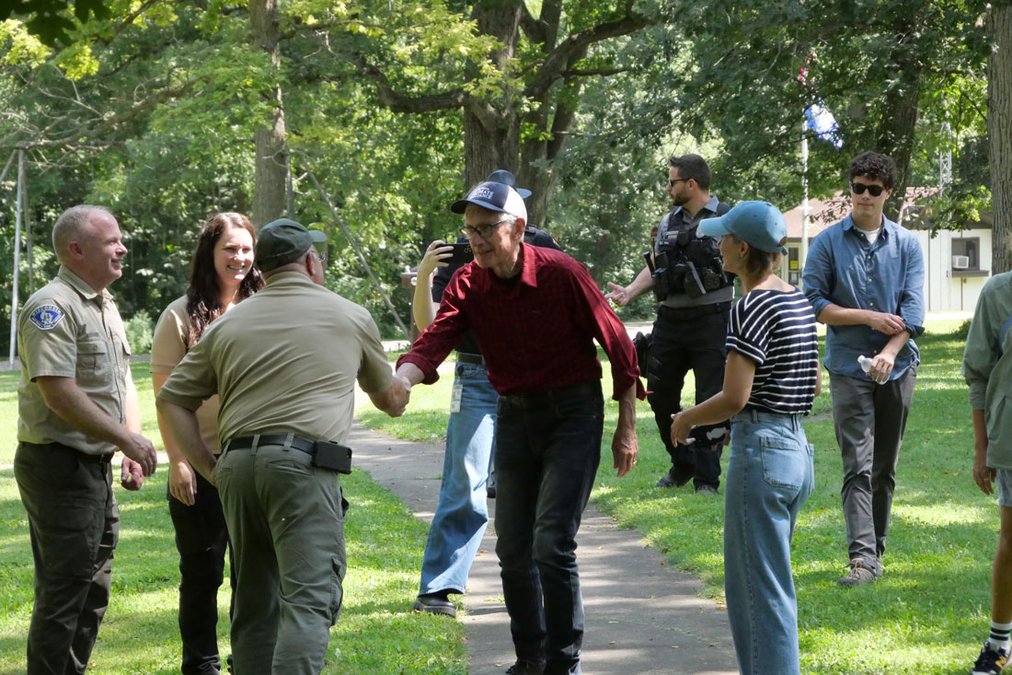
A big part of the credit deserves to go to the “Friends of” groups across the state — volunteers that coordinate everything from cleanup of parks, playgrounds, lakes and trails to special events to raise money to continue those efforts.
“One of the first things I am going to do when I get out is be part of the friends group at Governor Nelson Park and do that in some spare time,” Evers said. “Those people are absolutely necessary, but we can’t just expect them to help every day.”
Evers told the crowd that once he retires when his term ends in early 2027, he plans on spending a lot more time a various state parks.
The Wisconsin State Park System provides places for outdoor recreation and for learning about nature and conservation. State parks, forests, trails and recreation areas see more than 20 million visits a year, according to DNR and state tourism statistics.
“We have the parks, we have fishing, we’ve got wildlife, we’ve got hunting — all of these things take time and money and people, and I’m concerned we haven’t helped them enough,” Evers said.
Wisconsin State Parks today
Wisconsin State Parks offer a wide variety of options for visitors, from camping, hiking trails, fishing, to regular nature programs and events. The parks are also growing in the accessibility for all abilities, allowing visitors in wheel chairs to go on nature walks, fish and join the excitement. Pets are also allowed with only a few simple rules to follow.
Wisconsin State Parks are not free, however. A 12-month vehicle pass is just $28 for the first vehicle in a house, compared to the $13 daily pass. Wisconsin residents with Wisconsin vehicles are just $3 a day, or $13 for the year. Out of state plates are $16 a day and $38 per year.
Certain trails for cyclists cost money as well, with a $5 daily pass and $25 annual pass, regardless of state residency.
New Glarus Woods State Park and Yellowstone Lake State Park near Blanchardville have camping options. Yellowstone and Cadiz Springs State Recreation Area near Browntown also having options for fishing and beach swimming. Yellowstone is large enough for sporting motorboats, while Cadiz has trolling restrictions. All three parks have a plethora of hiking trails.
Local State Park Information:
● Cadiz Springs is a day use area that provides picnicking, hiking, hunting, fishing and wildlife watching opportunities. Located in southwest Wisconsin’s driftless area, the landscape is uniquely different from the rest of the state. Here the bogs, marshes and many lakes are replaced by rolling hills and valleys with spring-fed streams. There is no camping at Cadiz Springs.
● New Glarus Woods State Park is a 435-acre state park offering camping, hiking, picnicking and snowshoeing just south of the city of New Glarus. The park has direct access to the Sugar River State Trail, a 24-mile linear trail surfaced with compressed limestone screenings, for bicycling, hiking and snowmobiling.
● One of a few lakes in southwestern Wisconsin, 450-acre Yellowstone Lake State Park is a popular year-round recreation area that offers visitors ample space to enjoy camping, swimming, fishing, boating, hiking, biking and picnicking. In winter the park is open to ice fishing, snowmobiling and cross-country skiing. A large family campground and group camp are just a short walk from the beach and boat landing. Renovation work on campsites and parking lots is taking place at Yellowstone Lake through spring 2026. Construction will take place Mondays through Fridays during daytime hours. Some roads may be closed or reduced to single-lane traffic.
● Belmont, from the French belle monte, means “beautiful mountain.” The top of Belmont Mound is 1,400 feet above sea level, providing some fantastic views of the area. Wisconsin’s First Capitol historic site is a half mile west of the park. The park is operated by the Belmont Lions Club.
For more information on individual state parks, news on the parks, climate, environment, hunting, fishing, or to purchase a license or 125th Anniversary merchandise, go to dnr.wisconsin.gov.
From the DNR...
In the beginning
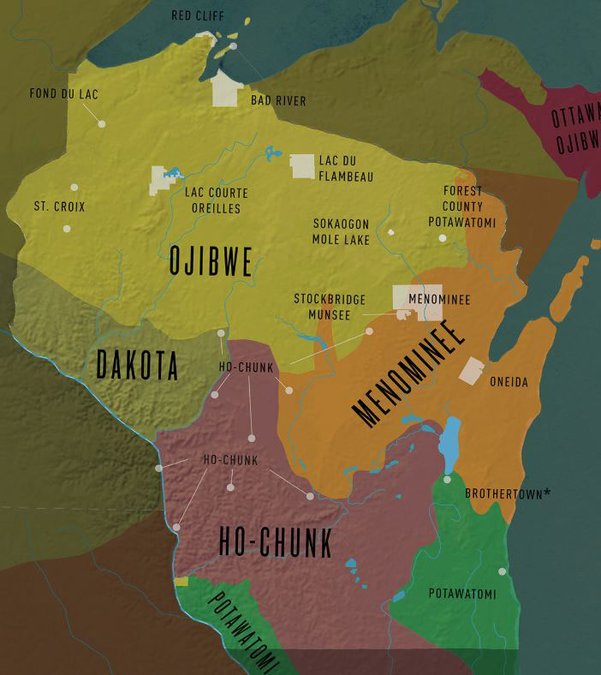
On its website, the Wisconsin Department of Natural Resources stated it has the privilege and responsibility to acknowledge the Indigenous people who have called this land home for generations. “This acknowledgment demonstrates our strong commitment to collaborate and partner with the sovereign Tribal nations located in Wisconsin.”
There are now 12 Tribal nations that call Wisconsin land home, 11 of which are federally recognized. “No matter where you are in the state, you are on the ancestral land of a Tribal nation,” the DNR acknowledges.
The department reminds everyone to take the opportunity to learn about and appreciate the history of the land they are on and the great historical, present and future contributions of Indigenous people.
The Park That Wasn’t
In 1878, the Wisconsin Legislature set aside 50,000 acres of Public Trust Fund Lands, part of a 760-square-mile area to be “The State Park for Wisconsin.” These were scattered timber lands located in Lincoln, Iron, Vilas and Oneida counties.
Because no effort was made to develop these lands, the Legislature of 1897 rescinded its previous actions and during subsequent years, many of the lands were sold to lumber interests.
Even though these lands were sold, many Wisconsin citizens at the time believed that areas of statewide significance should be acquired for the use and inspiration of the people.
At the Dalles of the St. Croix, this public interest first took form.
Interstate-Wisconsin’s First State Park, 1990
Harry D. Baker of St. Croix Falls, Wisconsin and George H. Hazard of Taylors Falls, Minnesota headed groups from their respective states for acquiring land on both sides of the river for an Interstate Park. In 1895, their efforts caused the Wisconsin Legislature to authorize a “Commission for the Interstate Park at the Dalles of the St. Croix.”
Under the commission’s direction, land was acquired, and Interstate Park was established as Wisconsin’s first state park on Sept. 20, 1900.