I have been planning to write a few columns about Paul Ruf since I started writing these columns, but I keep finding more and more information about this industrious man and his business endeavors. Due to the encouragement of Sharon Riese, owner of the former Ruf Block, we shall learn about his early days in this (and the next) column. I plan to write more columns about his businesses in the future.
Paul A. Ruf was born in Monroe on May 12, 1881, the second child of Carl and Mary Ruf’s five children. As a young child Paul lived in the family home on the southwest corner of 10th Street and 22nd Avenue. In the early 1890s they moved to 2524 10th Street where Paul would live with his parents until he married Mary Ruf (no relative) on September 25, 1922. Paul’s father, a German immigrant, was a cigar manufacturer for most of his life, but was listed as a saloon keeper in 1885.
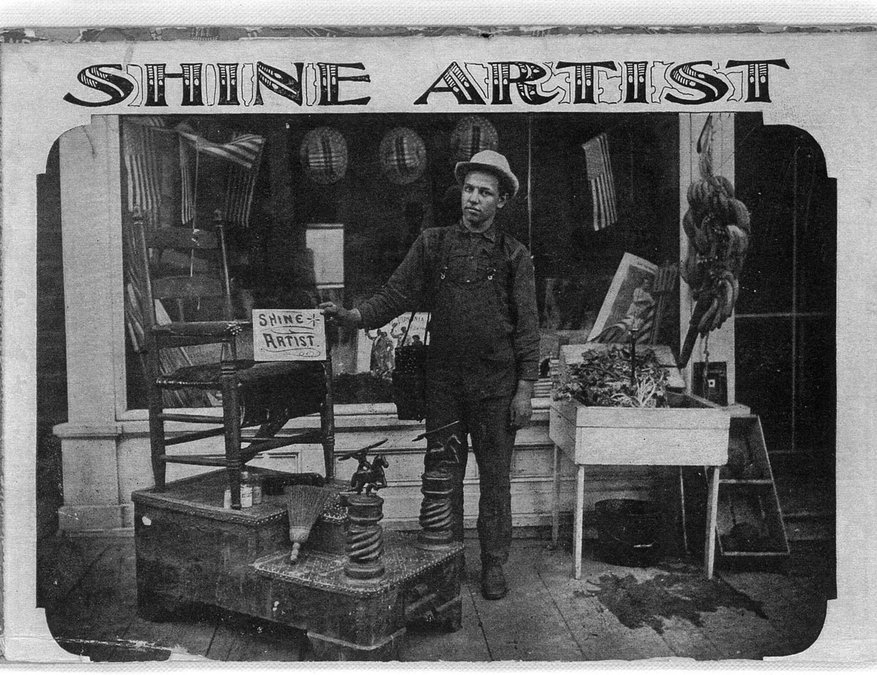
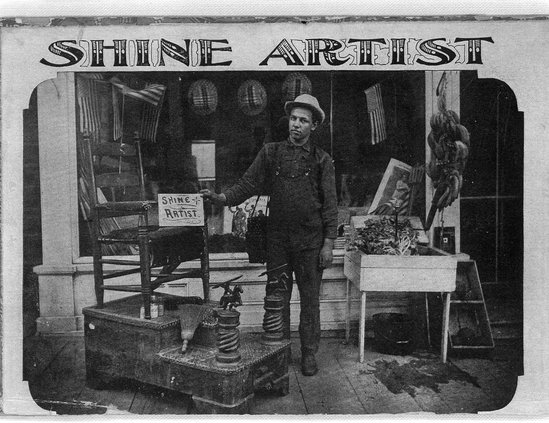
In 1897 Paul opened his first place of business in a building on the northeast corner of the Square where the new pocket park is located. Since he was a minor, his father had to sign the lease. A short article in the December 20, 1899 Monroe Sentinel said that “Peely” Ruf, the popular shine artist, and proprietor of that “clean, tidy little establishment opposite the Karlen Block” wanted everyone to try his fine homemade and imported candies. He also carried nuts of all kinds, fresh popcorn, and peanuts daily. He asked people to place an order for their Christmas supply. He also carried “the celebrated ‘Shine Artist’ 5-cent cigars.”
He purchased Mrs. Wright’s Chicago and Milwaukee newspaper business in September 1900. Papers would be delivered to patrons as they had been by her or could also be purchased at his business. Orders were also taken for Sunday editions with delivery “to any part of the city at the regular rates.” The ambitious Ruf also purchased the Sunday paper route from J. C. Hood, giving Ruf “full control of the Sunday paper business” in Monroe.
A short ad in the December 17, 1902 Sentinel mentioned that Ruf had a complete line of Christmas confectionery in packages suitable for presents, but also had a complete line of bulk candies. “All goods fresh and pure.”
It was announced in November 1903 that Ruf, now 22, had sold his shine stand to Ernest Maurer, who had moved it to Schneider & Zilmer’s shoe store. It was announced the following April that the building that Ruf had been occupying was for sale so the Commercial & Savings Bank could be constructed on that site. Ruf announced in the Monroe Evening Times on April 13 that his business would continue operating in the same building “until July 1st, when my lease expires.”
He announced on May 21 that he had taken a five-year lease on the corner room in the Bridge block on the southwest corner of the Square, taking possession on July 1. He planned to put on a new front and “put in a soda fountain and billiard tables in addition to his confectionery and news business.” It was shared on June 11 that Ruf had returned from Chicago that morning where he had purchased “some fine fixtures for business.”
A newspaper article on June 17 showed what a headstrong businessman Paul Ruf was. He declined to vacate the building, even though “the work of excavation is going on under the building. The building has been propped up and about all the dirt has been removed, so that the prosecution of the work has not been delayed.” Three days later, it was reported that “one of the posts was knocked out from under the building occupied by the Ruf news stand by a blast that was set off at noon. The floor heaved up, but the building remains secure on the other posts.” [A photo of this area taken about this time can be seen on page 37 in the Monroe Area Pictorial History.] Ruf moved his business to the new location by June 29.
He must have appreciated his larger building as he received a ton of peanuts from Williamsburg, Virginia on May 8, 1905. It was the largest shipment of peanuts ever to Monroe at the time. A year later it was announced that he had bought the newspaper lists of the Galusha agency, giving him the exclusive agency in Monroe for the Chicago, Milwaukee, and St. Louis daily and Sunday newspapers. He also received two new showcases and a rack for candies in golden oak in December. They added “much to the appearance of the store.”
After a misunderstanding regarding the prices of Sunday newspapers, it was clarified on May 6, 1907 that Ruf was selling the Sunday papers at the same price, five cents over-the-counter except the Sunday American, which was seven cents. To have the Sunday papers delivered was an extra $.30 per month.
Ruf purchased a new soda fountain in June 1907, made by L. A. Becker, Chicago. It was one of the newest fountains made and had a marble base and a body of onyx finished off with marble. Ruf discontinued pool and billiards, so his confectionery and ice cream and soda departments could occupy the entire room. The partition, which had divided the room, was removed to make the room even more attractive. The pool and billiard tables were shipped to Mineral Point. Ruf had “a large retail cigar trade and the larger quarters will enable him to add to the attractiveness of his cigar and tobacco stock, and the new arrangement will also give him additional space for his newspaper business, something that has long been needed.”
We’ll learn more next week about the changes made to the Ruf Confectionery in the next three years.
— Matt Figi is a Monroe resident and a local historian. His column will appear periodically on Saturdays in the Times. He can be reached at mfigi48@tds.net or at 608-325-6503.