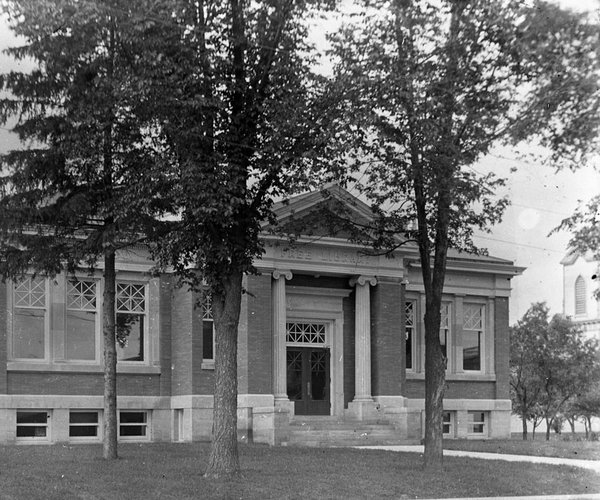
Some of you may have heard in the past that Monroe was in line to get a Carnegie Library [2,509 Carnegie libraries were built between 1883 and 1929] in the early 1900s. After you read this column and the next three, you will better understand why we ended up with the A. Ludlow Memorial Library instead.
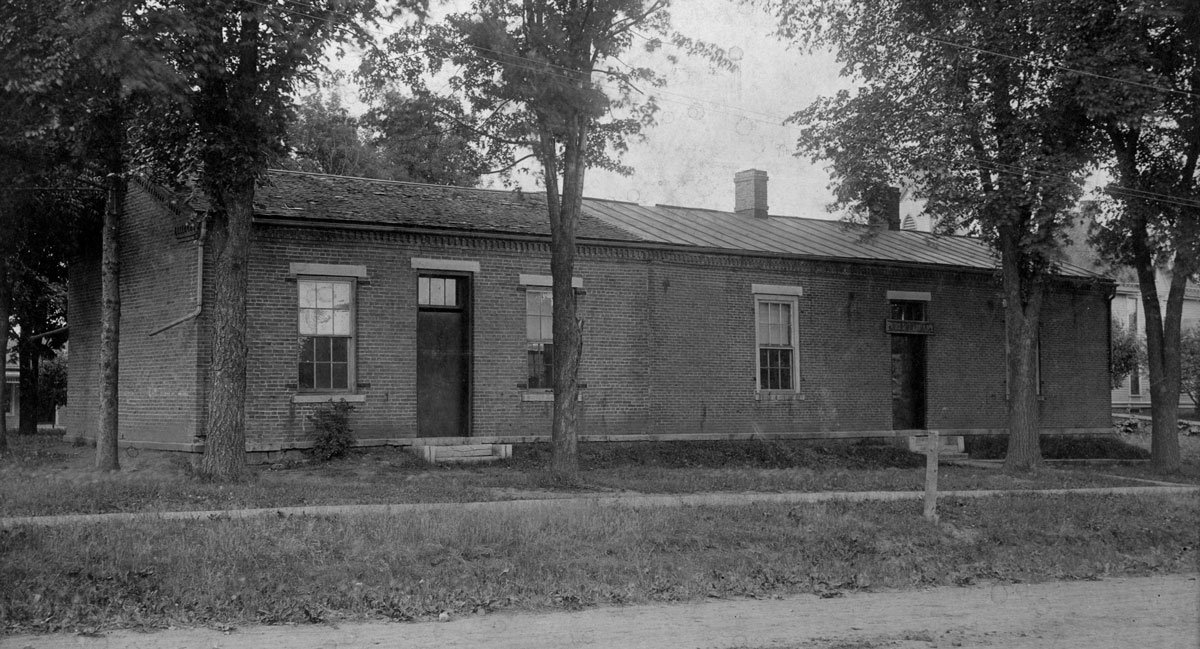
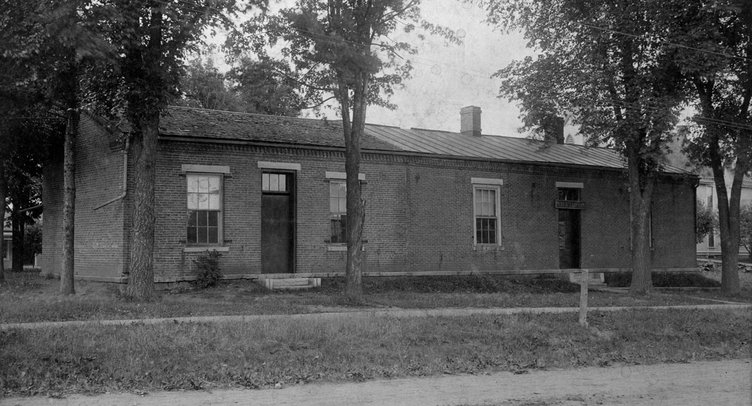
You may recall in a previous column that the Monroe school district purchased the former county building on the northeast corner of 15th Avenue and 9th Street to be used as a library in 1892. That building served its purpose for nearly 10 years before there was talk of building a new library. The first reference found about the Carnegie library appeared on July 17, 1901 in the Monroe Sentinel. It was mentioned that if the citizens organized a library association and pledged $2,000 a year for support, they might be able to secure $15,000 or $20,000 for a new library. It was noted that the annual appropriation for books at that time was only $1,000.
A similar suggestion appeared again in September. It was a reported in November that “there is a movement” in this direction. However, they were “not at liberty to divulge the plan just yet. Just watch for developments.”
On March 19, 1902 the Monroe Evening Times asked “its readers to picture for themselves on the site of the present library building a new Carnegi [sic] library of artistic design costing $20,000, built of pressed brick or stone, with copper cornice, slate roof, and tile floors throughout.” W. W. Churchill, formerly of Monroe, who was living in New York and acquainted with Carnegie, approached Carnegie. Churchill came to Monroe “with the news that Mr. Carnegie will send the money just as soon as he gets a guarantee that the local end of the project will be carried out.”
Carnegie stated that he would give as much money toward the building as the people, or some responsible party, would guarantee 10% annually for maintenance and the addition of books and current expenses. Churchill, who was employed by Westinghouse, Church, Kerr & Co., “would see to having the plans and specifications made up by the architect” of that company. All Monroe needed to do was double the appropriation already being made. Since the school board owned the library, no action could be taken at that time, but had to wait until the annual school meeting in July.
The Times reported on March 24 that there was “enthusiastic interest.” Some residents “desired that action be taken at once in order that the work may be underway as early in the season as possible.” The highest taxpayers were among those who were “heartily in favor of the library.”
An article in the Sentinel in May listed that Monroe had accepted $20,000, Beloit $25,000, and Janesville $35,000 with all of Wisconsin receiving a total of $422,000 of Carnegie money. It stated that “several of these libraries are already in process of construction.”
Churchill, who was here on vacation a year later in May, “forwarded to Pittsburgh photographs of the old building that show its cracked walls in general unfitness.” He also included some photographs of the interior to show that the city “is interested in a library and is making the most of what it possesses.” He added that the Carnegie organization had been slow because the city already had a library.
There was not much discussion about a new library at the annual school meeting, held at Turner Hall on July 6, because there was much discussion about whether to erect a new high school building. President Wright had received a telegram from Churchill, but “there was some misunderstanding regarding the amount of the donation.” Churchill hoped to clear that up, but suggested that $2,000 be appropriated.
Certain citizens were opposed to the “Carnegie library proposition by reason of the fact that its acceptance will take the control of the library out of the hands of the school board and place it in the hands of the city.” At their meeting on July 15, the Monroe Business Men’s Association voted “to use their influence in favor of accepting the proposition.”
It was announced on August 3 that Carnegie considered $12,500 sufficient for a library in a city the size of Monroe, which was his final offer. All the city had to do was agree to support the library with at least $1,250 a year. The city also had to provide a site for the building.
School board president Colin W. Wright informally presented a suggestion to the city council on August 19 that they accept the Carnegie gift and have the library built on the site of the library at that time. No official action was taken by the city council.
A legal obstruction was mentioned in the Times on August 28 that might terminate the deal because the school district owned the library instead of the city. Because Carnegie had only dealt with city governments, legal advice was then sought.
This was cleared up in early September by referencing the law. The school board had no legal authority to act in the matter; it was up to the city council to pass the proposed ordinances. The school board was willing to do all in its power to turn over the site and the library to the city so the deal could be made.
A letter sent to Churchill on the matter was shared in the Times on September 29 that the cashier of a Trust company had “been instructed to arrange payments as the work proceeds on the building.” It was thought that it would be necessary to appoint a board to administer, especially during the construction. The work could be started after the snow was gone in the spring, which would allow ample time for the plan to take affect.
It will be shared next week how much longer it took to obtain the money.
— Matt Figi is a Monroe resident and a local historian. His column will appear periodically on Saturdays in the Times. He can be reached at mfigi48@tds.net or at 608-325-6503